What Actually Makes a Supplier a Genuine Organic Turmeric Powder Supplier?
"Organic" on a product page can mean two very different things. It can mean a farm that has gone through a formal certification process — annual inspection, documented input records, a certificate number a buyer can independently verify — or it can simply mean the grower says no chemicals were used, with nothing behind that claim except the word itself. A genuine organic turmeric powder supplier is one that can hand over the first kind of proof, not just repeat the second kind of statement.
That distinction matters more with turmeric than with many other spices, because it's a root crop grown in soil for eight to ten months, which gives it plenty of time to absorb whatever is or isn't applied to that soil over the season. Certification exists specifically to document that history — which is exactly why a buyer working across borders, retail shelves or regulated categories should treat the certificate number as the starting point of due diligence, not the end of it.
This guide covers the certification schemes worth checking, how organic farming practice actually shows up in the finished powder, what a proper lab report should include, and the questions worth asking before a sample order turns into a recurring contract.
Instead of asking whether a supplier "sells organic turmeric powder," ask for three things: the certificate number and issuing body, the farm or farmer-group it's registered to, and a batch-specific lab report for the exact lot being quoted. A supplier that produces all three without hesitation is worth shortlisting.
The Documentation a Genuine Supplier Should Actually Be Able to Show
A label that says "organic" or "high-curcumin" is a claim. What actually backs that claim up is batch-specific lab documentation — a Certificate of Analysis and independent curcumin content certification for the exact lot you're being quoted, not a generic spec sheet reused across every shipment.
Documentation Every Batch Should Carry
The two documents a buyer should ask for by name, and what each one is actually meant to confirm.
| Document | Covers | What It Confirms |
|---|---|---|
| Certificate of Analysis (COA) | Curcumin %, moisture & ash | Batch-specific lab results for the exact lot being shipped, issued alongside the order rather than as a generic reference sheet. |
| Curcumin Content Certification | Curcuminoid percentage | Independent lab verification of potency, so a curcumin claim on the spec sheet is backed by a tested figure rather than an estimate. |
Does "Organic" Automatically Mean Higher Curcumin? Not on Its Own.
Buyers sometimes assume "organic" and "high-curcumin" are the same claim. They aren't. Organic certification confirms how the turmeric was grown — without synthetic pesticides or fertilizers. It says nothing about which cultivar was planted or which region it came from, and those two factors influence curcuminoid content far more than farming method alone.
A certified organic powder grown from a naturally low-curcumin cultivar can still test lower than a conventionally certified powder grown from a high-curcumin variety. The two questions — is it organic, and how much curcumin does it contain — need separate answers, each backed by its own documentation.
Curcumin Content by Origin — Organic Powders Compared
Indicative curcuminoid content on a dry-weight basis, shown here as a relative comparison rather than an absolute scale. Always confirm the actual figure on that batch's own lab report.
Lakadong-Origin Organic Turmeric Powder
Grown from a naturally high-curcumin cultivar in Meghalaya's Jaintia Hills, certified organic.
Standard Certified-Organic Turmeric Powder
Typical range for organic-certified powder grown from common commercial cultivars.
Uncertified Commercial Turmeric Powder
Typical range where cultivar and farming inputs aren't independently verified.
How Organic Farming Practice Actually Shows Up in the Finished Powder
Certification paperwork describes a set of practices — but it's worth understanding what those practices are actually doing to the crop, since it explains why some certified organic powders still vary from one supplier to the next.
Nutrient input comes from compost, green manure and organic-approved amendments rather than synthetic chemicals — the core requirement behind every certification scheme.
Turmeric is typically rotated with other crops or left fallow between cycles, supporting the soil biology the plant depends on over its long growing season.
Certified organic operations keep input records and field history a buyer can trace back to a specific registered farm or farmer group, not just a regional claim.
Certification bodies re-verify practices through on-site inspection at least once a year, rather than relying on a one-time sign-off.
How Certified Organic Turmeric Is Turned Into Powder
Certification covers the farming stage. Everything that happens after harvest — curing, drying and milling — is where a supplier's processing discipline either protects that raw material's quality or quietly erodes it.
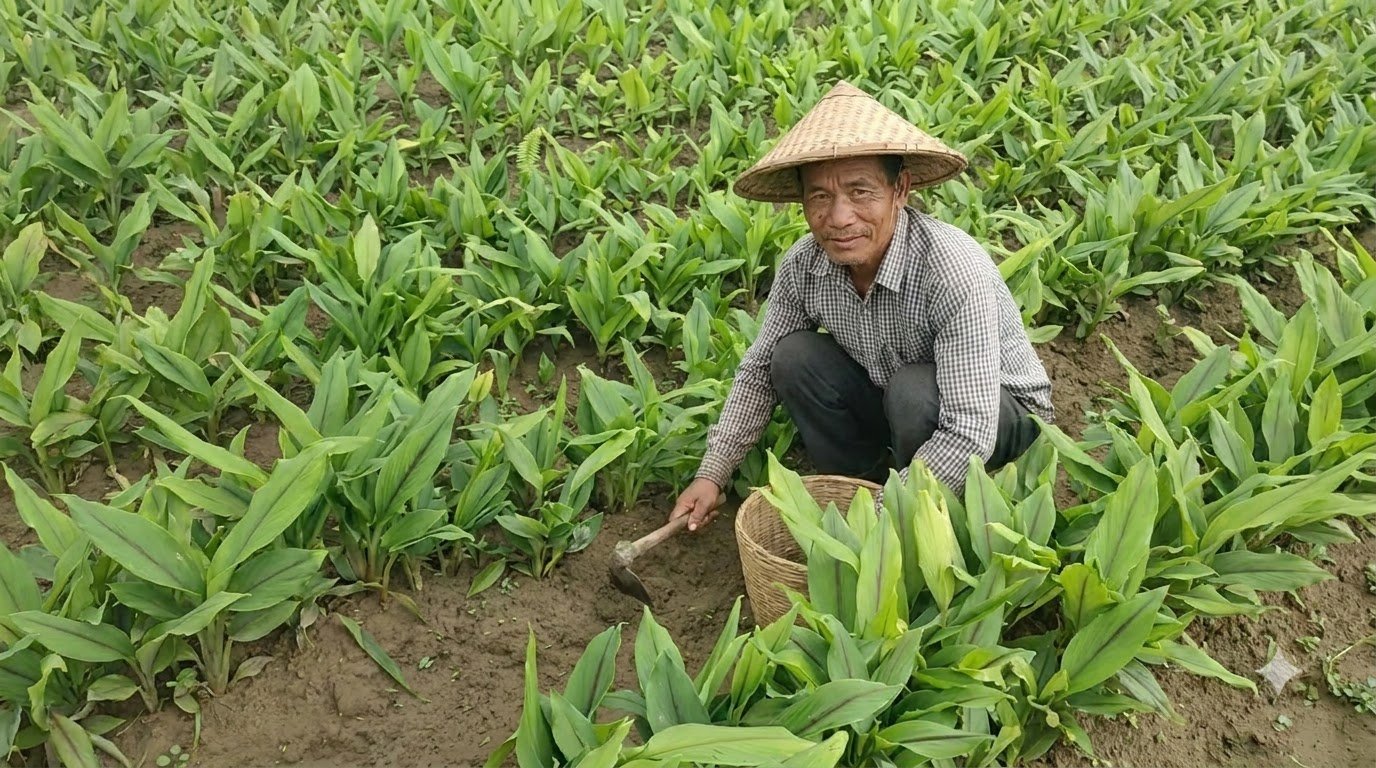
Rhizomes are graded immediately after harvest — a step that affects both yield and the consistency of every batch that follows.
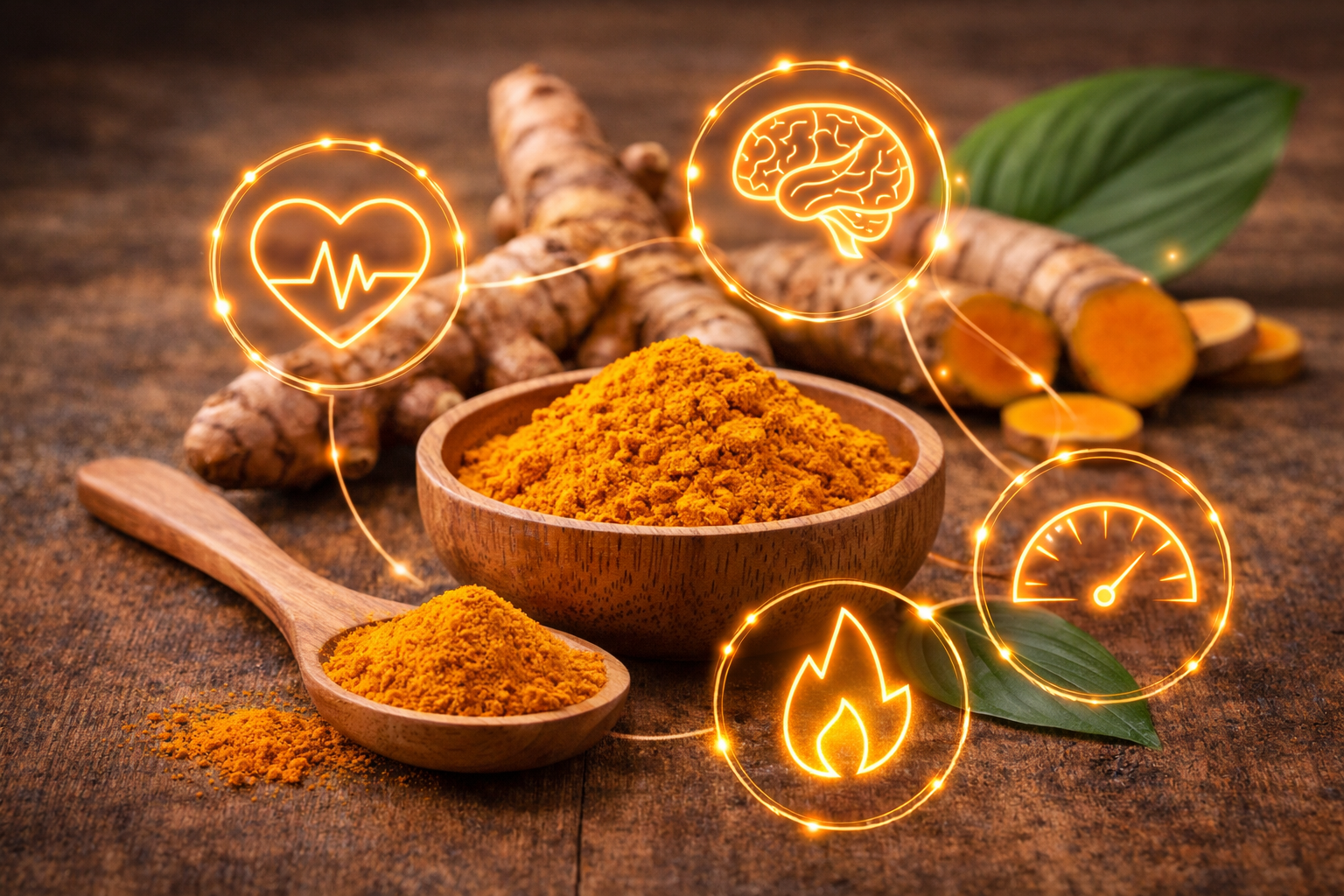
Low-heat milling helps protect curcumin content and aroma that high-temperature processing tends to erode.
Seven Stages, From Certified Field to Packed Powder
Swipe through the sequence a properly run organic turmeric powder supplier should be able to describe in detail, stage by stage.
Certified Organic Cultivation
Grown under certified protocols — no synthetic pesticides or fertilizers, audited annually.
Hand-Harvesting at Maturity
Rhizomes are lifted by hand once the crop reaches full maturity, generally 8–10 months after planting.
Boiling & Curing
Fresh rhizomes are boiled and cured to stabilize colour and ease the drying process that follows.
Slow, Low-Heat Drying
Cured rhizomes are dried gradually to preserve curcumin content and aroma, avoiding high-heat shortcuts.
Low-Heat Milling
Dried fingers are ground into powder at controlled temperatures to limit oxidation and volatile-oil loss.
Sieving & Lab Testing
Powder is sieved to the required mesh size and tested for curcumin, moisture and pesticide residue.
Packaging & Export Docs
Moisture-controlled, batch-coded packaging with COA and export paperwork travels with the shipment.
Want to See a Real Organic Certificate Before You Order?
We're happy to share our current organic certification documents and a batch-specific lab report for our standardized organic turmeric powder — no obligation, just the paperwork a serious buyer should see first.
Lab Tests & Documentation Worth Demanding
A curcuminoid percentage or an "organic" label on a product page is a claim. A signed certificate and a batch-specific lab report are proof — and with a bulk order, that difference is worth insisting on before goods ship.
- A valid organic certificate with a checkable certificate number and issuing body
- A batch-specific Certificate of Analysis covering curcumin %, moisture and ash content
- Pesticide-residue testing showing results below the limit of quantification
- Microbial and aflatoxin testing available on request for food-grade orders
- Farm or farmer-group traceability behind the certified claim
- Consistent specifications across repeat orders, not just the first sample
- "Organic" used only as a marketing description, with no certificate number offered
- No batch-specific lab report accompanying the evaluation sample
- Reluctance to name the certifying body or share the certificate for verification
- Vague sourcing claims with no traceability to a named farm or region
- Specifications that shift between the sample batch and the bulk shipment
- No support for the export documentation your target market requires
- 🧾Start with the certificate — verify the certificate number, issuing body and expiry directly with the certifier, not just the supplier.
- 🔬Request the batch-specific COA — curcumin, moisture and ash figures for the exact lot you're quoted, not a generic typical-values sheet.
- 🌱Ask about farm traceability — which registered farm or farmer group the batch is sourced from, and how far back that record goes.
- 🧪Confirm pesticide-residue testing — results should be reported against a recognized limit, not simply described as "clean."
- 🔁Order a second sample before scaling up — consistency across two independently tested batches tells you more than one good result ever will.
Industries That Rely on a Reliable Organic Turmeric Powder Supplier
Organic certification opens doors in categories where conventional sourcing simply won't clear the compliance bar — part of why demand for verified organic turmeric powder keeps outpacing demand for the uncertified version.
Formulations built around traditional herb sourcing, where certified organic status is often a baseline expectation rather than a premium add-on.
Organic spice blends, seasoning mixes and functional food products that carry an organic claim on their own packaging.
Organic-certified powder used as a base ingredient in capsules and tablets marketed on a clean, verifiable ingredient story.
Organic turmeric powder used in face packs, soaps and topical formulations, where the organic claim carries directly onto the finished label.
A Buyer's Checklist for Vetting Any Organic Turmeric Powder Supplier
Whether you're testing a single evaluation sample or setting up a recurring bulk contract, this is roughly the sequence experienced buyers work through.
Get Our Organic Certificate & Latest Spec Sheet
Want to see exactly what a properly certified, lab-verified organic turmeric powder looks like on paper before you commit to an order? We're happy to share ours.
FAQs — Organic Turmeric Powder Supplier
It means the turmeric was grown without synthetic pesticides or fertilizers, with that claim backed by batch-specific lab documentation — a Certificate of Analysis and independent curcumin content certification — rather than simply being described as chemical-free without supporting proof.
The core difference is farming input, not necessarily curcumin content: organic turmeric is grown without synthetic pesticides or fertilizers under a certified, inspected system, while conventional turmeric may use approved synthetic inputs. Curcuminoid content depends more on cultivar and origin than on farming method alone.
At minimum, a batch-specific Certificate of Analysis (COA) covering curcumin percentage, moisture and ash, along with independent curcumin content certification for the exact lot being quoted — documentation tied to that specific batch, not a generic spec sheet.
Not automatically. Curcuminoid content is driven mainly by the turmeric cultivar and the region it's grown in, not by organic certification alone. A high-curcumin cultivar grown organically will generally outperform a low-curcumin cultivar grown conventionally, but the two variables should be checked separately.
A batch-specific Certificate of Analysis covering curcuminoid content, moisture and ash, along with pesticide-residue testing reported against a recognized limit. Food-grade buyers should also ask about microbial and aflatoxin testing on request.
Many established suppliers offer private label and OEM packaging for organic turmeric powder, but minimum order quantities and available formats vary. Buyers should confirm these details directly rather than assuming every supplier offers the same options.
Contact the certifying body listed on the supplier's documentation to confirm the certificate number is valid, ask for a batch-specific lab report for the exact lot being quoted, and request traceability back to the certified farm or farmer group before scaling up an order.
So, What Should You Look For in an Organic Turmeric Powder Supplier?
Strip away the marketing language and the answer is fairly narrow: a valid, checkable certificate; documented farm traceability; a batch-specific lab report; and a specification that holds steady from the first sample to the tenth bulk order. Everything else — origin story, packaging format, presentation — matters, but only once those four boxes are actually checked.
If you're comparing suppliers, work through the checklist in this guide against each one before committing to a purchase order: certificate, traceability, lab documentation, and consistency, in that order.
We supply certified organic turmeric powder processed from lakadong turmeric grown in Meghalaya's Jaintia Hills, with organic certification, batch-specific lab reports and private label packaging available on request. Reach out through the contact section above for evaluation samples, certification documents or bulk enquiries.