Why Meghalaya Turmeric Gets Singled Out From the Rest of India's Crop
India grows and exports more turmeric than any other country, and Meghalaya's share of that national output is genuinely small. Yet ask a formulator, an Ayurvedic manufacturer or a spice buyer chasing high curcumin content where they'd look first, and this small north-eastern state — bordered by Assam to the north and Bangladesh to the south — comes up disproportionately often. That reputation isn't accidental. It comes from a specific combination of altitude, rainfall, soil and generations of low-input hill farming that Meghalaya's growing belts happen to share.
It's worth being precise about terminology here, because the two terms get conflated constantly. "Meghalaya turmeric" is the broad category — every variety grown anywhere in the state. "Lakadong turmeric" is a specific, traditional cultivar grown mainly within villages of East and West Jaintia Hills. Every Lakadong turmeric is Meghalaya turmeric; not every Meghalaya turmeric is Lakadong. A supplier who blurs that distinction, intentionally or not, isn't doing buyers any favours.
This guide works through where in Meghalaya turmeric is actually grown, the handful of traditional varieties cultivated alongside Lakadong, what the curcumin figures genuinely mean once you look past the headline number, and the checks worth running before any of it lands in a purchase order.
If a listing simply says "Lakadong" without naming a district, village or growing belt, that's worth a follow-up question. Genuine Lakadong turmeric traditionally comes from growers in East and West Jaintia Hills. Turmeric grown elsewhere in Meghalaya may be excellent, but it isn't Lakadong, and a transparent supplier will say so plainly.
The Growing Conditions That Give Meghalaya Turmeric Its Edge
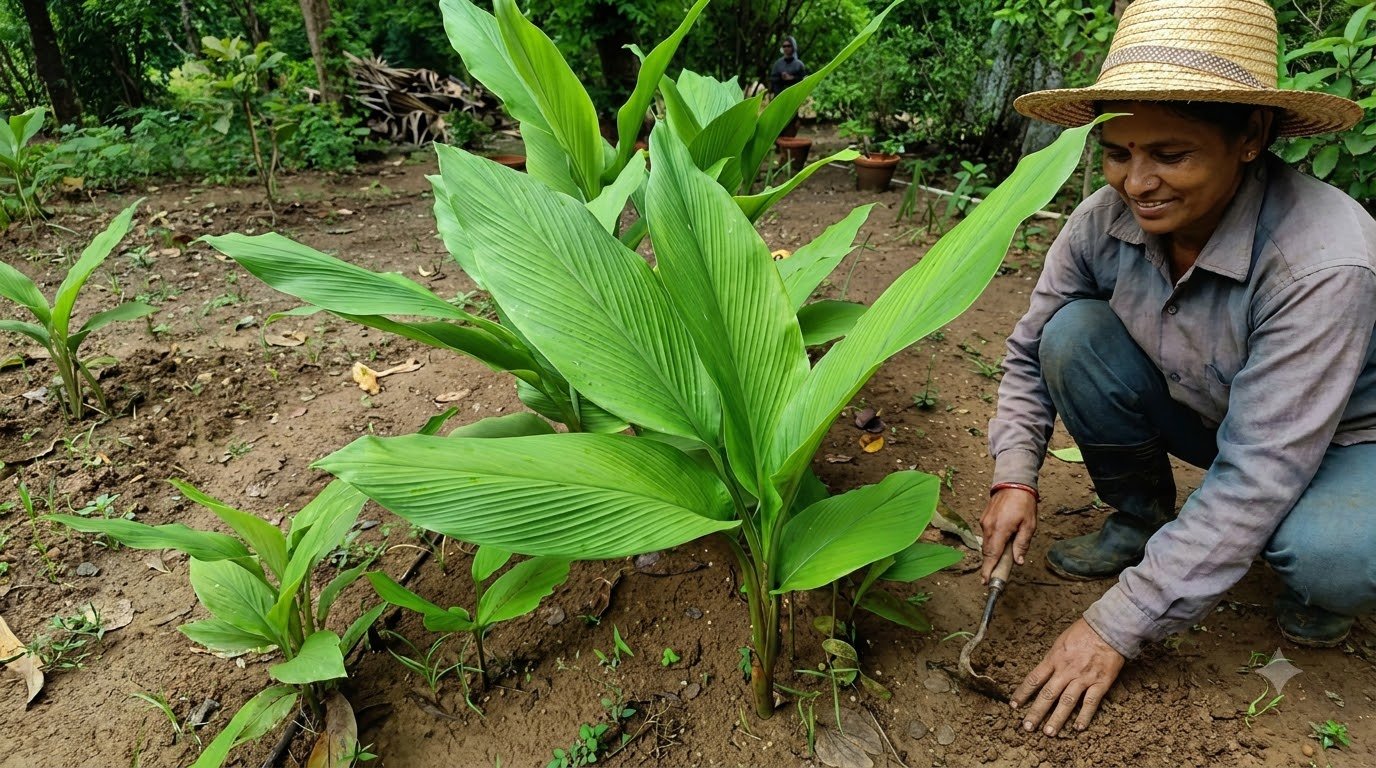
Meghalaya translates roughly to "abode of clouds," and the description isn't just poetic — parts of the state rank among the wettest places on earth. Combined with hill elevation and soil type, that climate is central to why turmeric grown here consistently tests differently from turmeric grown on the plains.
Growing Conditions Across Meghalaya's Turmeric Belts
A snapshot of the agro-climatic factors most often cited for the region's naturally elevated curcumin content, drawn from the Jaintia Hills plateau where documentation is most detailed.
Government officials working on the state's turmeric development programmes have made a point worth repeating to buyers: attempts to grow the Lakadong variety outside Meghalaya have consistently produced lower curcumin readings, even using the same planting material. That's a strong signal the terroir itself — not just the seed stock — is doing real work here.
Where in Meghalaya Turmeric Is Actually Grown
Turmeric is cultivated in nearly every district of Meghalaya today, but production has always been concentrated in two broad belts: the Khasi-Jaintia Hills, home to the Lakadong-growing area, and the Garo Hills further west. According to Government of Meghalaya production data, the state grows an estimated 16,000 metric tonnes of turmeric a year, and that split between the two regions has stayed fairly consistent over time.
Turmeric Production Share by Region
Approximate contribution to total state turmeric output, based on Government of Meghalaya agricultural statistics.
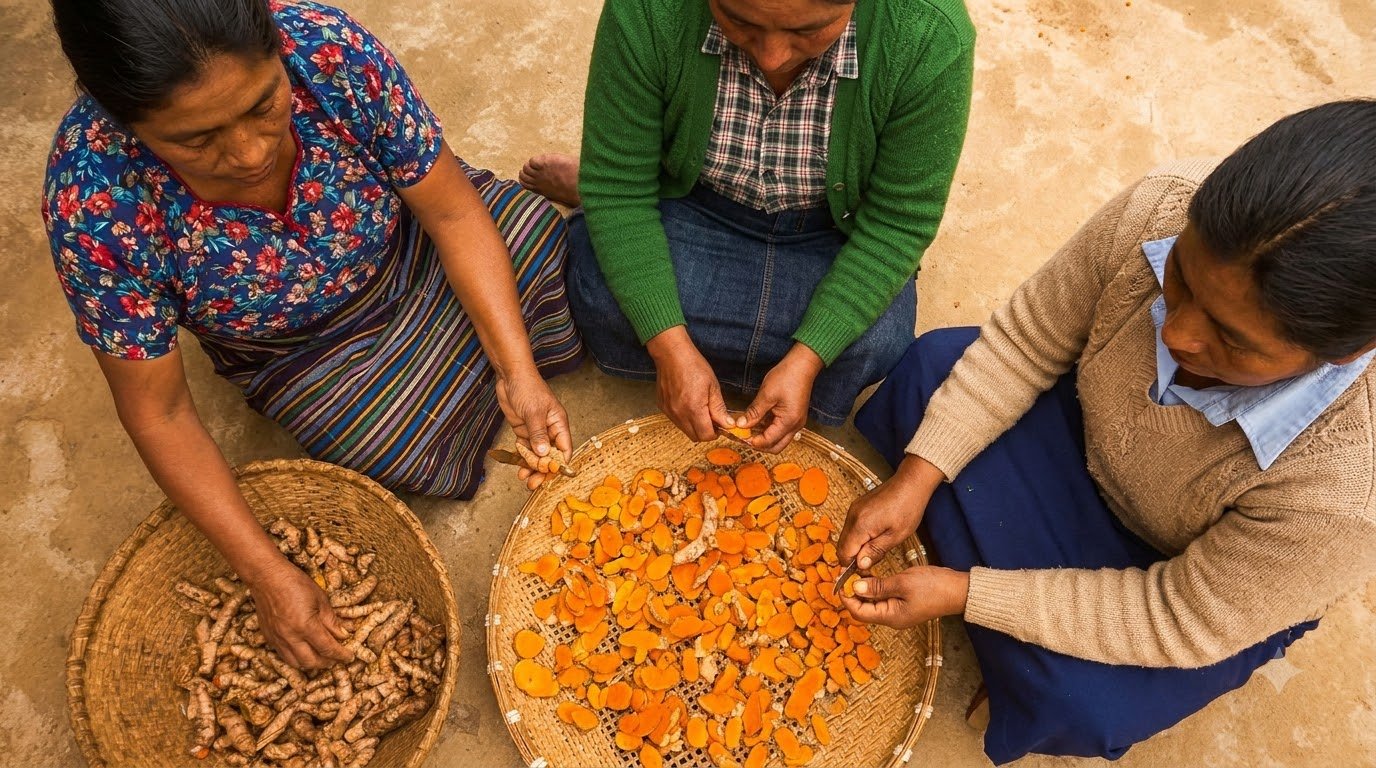
The Jaintia Hills plateau, where roughly three-quarters of the state's turmeric is grown across small, family-farmed plots.
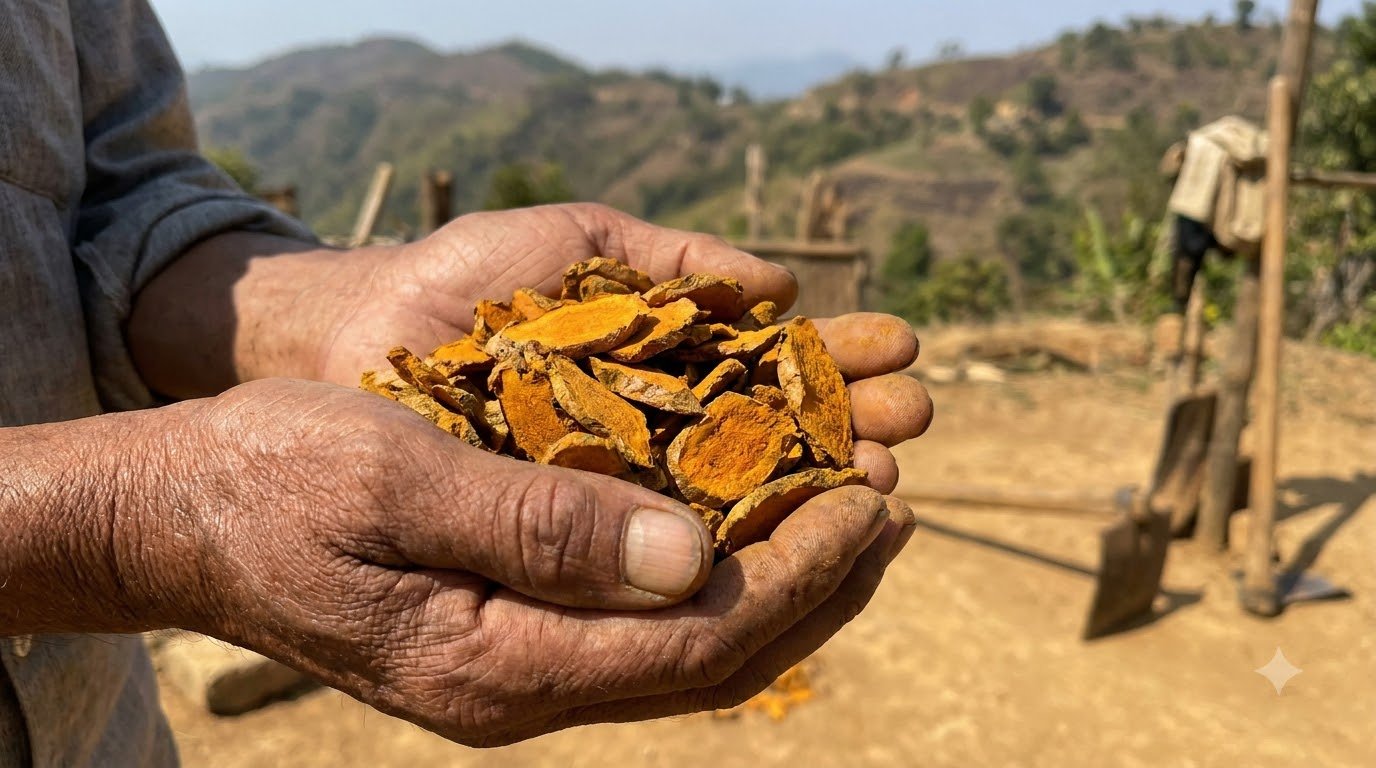
Freshly harvested rhizomes, hand-dug and graded before curing — deep colour is one of the first visible signs of a high-curcumin lot.
The Turmeric Varieties Cultivated Across Meghalaya
Lakadong gets most of the attention, understandably, but it's one of several traditional cultivars grown across Meghalaya's hills. Knowing the difference matters for buyers, because curcumin content, aroma and legal naming rights vary meaningfully from one variety to the next.
Turmeric Varieties Grown in Meghalaya, Compared
A side-by-side look at the cultivars most commonly documented in agricultural research on the state's turmeric belts.
| Variety | Primary Growing Belt | Curcumin Profile | Notes |
|---|---|---|---|
| Lakadong | East & West Jaintia Hills (registered villages only) | ~6.0%–7.5% in ICAR trials; various reports cite up to 12% | Traditional heritage name; darkest rhizome and strongest aroma of the group |
| Lashien (also spelled Laskein) | Jaintia Hills, grown alongside Lakadong | Below 5% in ICAR comparison trials | Long-standing local cultivar grown alongside Lakadong |
| Ladaw | Jaintia Hills | Below 5% in ICAR comparison trials | Common variety for household use and regional trade |
| Lakachain | Jaintia Hills belt | Not independently published | Traditional landrace, smaller-scale cultivation |
| Yangau | Jaintia Hills belt | Not independently published | Traditional landrace, smaller-scale cultivation |
| Megha-1 | Cultivated more widely across the state | Selected for elevated curcumin content | Improved planting option released by ICAR NEH, Umiam |
How Much Curcumin Does Meghalaya Turmeric Actually Contain?
Turmeric grown across most of India typically tests at around 2% to 5% curcumin on a dry-weight basis. Meghalaya's flagship Lakadong variety sits well above that range — but exactly how far above depends on which source you're reading. ICAR trials place it at roughly 6.0% to 7.5%, the Government of Meghalaya's own agriculture department cites a figure of about 7.4%, and various industry reports put premium lots as high as 12%.
That spread isn't a red flag by itself — curcumin content genuinely varies by soil, rainfall in a given season, plant age at harvest, and even the lab methodology used to test it. What it does mean is that a single headline number on a website or listing shouldn't be taken as gospel for every batch. The only figure that actually applies to the turmeric you'd receive is the one on that specific lot's Certificate of Analysis.
The highest figures reported for Lakadong turmeric represent the upper end of premium lots, not a guaranteed average across every harvest. If a supplier quotes a single high number for all their stock without offering a batch-specific lab report to back it up, ask for one before you order — not after.
The Traditional, Largely Chemical-Free Way Meghalaya Grows Its Turmeric
Most Meghalaya turmeric still comes from small, family-run hill plots rather than large commercial farms. Synthetic fertiliser and pesticide use has historically been low across the state — often described as "organic by tradition" rather than formally certified — and much of the crop is still hand-dug, hand-sorted and dried using methods passed down through generations rather than mechanised processing.
This is also, by a wide margin, work carried out by women. Within the core Lakadong-growing villages of Jaintia Hills, women are reported to make up close to the entirety of the farming workforce behind the crop — planting, tending, harvesting and curing turmeric that eventually reaches formulators and buyers thousands of kilometres away.
Grading and sorting is still done largely by hand in Meghalaya's turmeric-growing villages, most of it carried out by women farmers.
In 2020, Jaintia Hills farmer Trinity Saioo received the Padma Shri — one of India's highest civilian honours — for her long-running work empowering local turmeric farmers and promoting traditional, chemical-free cultivation among women's groups in the region. It's a useful reminder of how grassroots this crop's reputation actually is.
One caveat worth flagging honestly: "organic by tradition" isn't the same as certified organic. Practices are broadly low-input, but formal certification varies from farm to farm and cooperative to cooperative. If your end product needs certified-organic sourcing, ask your supplier for the actual certificate rather than assuming it from the region's general reputation.
Want a Real Certificate of Analysis Before You Commit?
We're happy to share a current batch COA and district-of-origin details for our Meghalaya turmeric lots — no obligation, just the documentation a serious buyer should see first.
How Meghalaya Turmeric Is Gaining Wider Recognition — and What's Next
The Lakadong name wasn't always widely known outside Meghalaya, and the crop wasn't always backed by a coordinated national investment plan. That's changed within the last few years, and it's useful context for understanding why sourcing this turmeric properly matters more now than it used to.
Toward a National Turmeric Mission
Key milestones in Meghalaya turmeric's move toward wider recognition and stronger supply-chain infrastructure.
How a Meghalaya Turmeric Harvest Moves Toward a Bulk Shipment
Turmeric is typically planted in April and May ahead of the monsoon, grows through the heavy rains between June and October, and is harvested once the rhizomes mature and the foliage dies back — usually between December and February. What happens after that harvest is where quality is either preserved or lost.
Industries That Rely on Meghalaya's High-Curcumin Turmeric
Naturally elevated curcumin content and a strong, dark colour make Meghalaya turmeric useful well beyond the spice rack — which is part of why demand keeps outpacing what smallholder farms can currently supply.
Rhizome and extract-grade feedstock valued for curcumin levels well above typical commodity turmeric, reducing the processing needed to reach standardized grades.
Deep colour and a distinctly robust aroma make it a sought-after ingredient for premium spice blends and specialty food brands.
Used as a natural dye source and in colour-forward cosmetic and personal-care formulations that favour plant-based pigments.
Long-standing use across Ayurvedic and traditional wellness preparations, where higher curcumin content is often treated as a marker of potency.
How to Tell a Genuine Meghalaya Turmeric Supplier From a Vague One
Demand for high-curcumin turmeric from this region has grown faster than the supply chain around it has always been able to formalise — which has created room for loosely sourced or mislabelled stock to circulate. A few checks go a long way toward avoiding that.
- Names the exact district, village or growing belt a given lot came from
- Distinguishes Lakadong lots honestly from other Meghalaya cultivars
- Provides a batch-specific Certificate of Analysis with curcumin, moisture and ash figures
- Can explain the harvesting, curing and drying methods used on that lot
- Offers batch traceability backed by COA and curcumin certification whenever the Lakadong name is used
- Supports bulk, OEM and private label formats with clearly stated minimum order quantities
- Everything from the state is marketed simply as "Lakadong," regardless of origin
- No Certificate of Analysis offered, or only a generic "typical values" sheet
- Cannot name the growing district, village or cultivar behind the stock
- Vague or evasive answers about curing and drying methods
- Curcumin claims that shift between the sample and the bulk shipment
- No traceability to a specific growing village despite using the Lakadong name commercially
- 📍Confirm the district and variety — ask specifically whether you're being quoted Lakadong or another Meghalaya cultivar, and from where.
- 🔬Request the batch-specific COA — curcumin, moisture and ash figures for the exact lot, not a generic reference sheet.
- 🏷️Ask for curcumin certification — if "Lakadong" is on the label, the curcumin percentage for that batch should be backed by lab certification, not just a headline claim.
- 🌱Ask about cultivation practices — organic-by-tradition is common, but certified organic should be verified separately if you need it.
- 🔁Order a second sample before scaling — consistency across two batches tells you more than a single strong result.
Get Our Latest Meghalaya Turmeric Spec Sheet
Want to see exactly which district, variety and grade you'd actually be ordering before you commit? We're happy to share current availability and lab-verified documentation.
FAQs — Meghalaya Turmeric
Meghalaya turmeric grows in high-rainfall hill terrain, often above 1,000 metres, on well-drained loamy soil under largely chemical-free, smallholder farming traditions. These conditions are widely credited for the region's naturally elevated curcumin content, particularly in the Jaintia Hills belt that produces the Lakadong variety, which tests well above the national average.
Curcumin content varies by variety, district and testing method. ICAR research places the Lakadong variety at roughly 6% to 7.5% curcumin, while various industry and government reports cite figures as high as 12% for premium lots, compared with an average of around 2% to 5% for turmeric grown in most other parts of India. Other Meghalaya cultivars such as Lashien and Ladaw typically test below 5%.
Turmeric is now cultivated across most of Meghalaya, but production remains concentrated in the Khasi-Jaintia Hills, which contribute roughly 72% of state output, with the remaining 28% coming from the Garo Hills districts. The core Lakadong-growing belt sits specifically within East and West Jaintia Hills.
No. Lakadong is a specific traditional variety whose name is used for turmeric grown within its home villages in East and West Jaintia Hills. Meghalaya also grows other traditional cultivars, including Lashien, Ladaw, Lakachain and Yangau, as well as the ICAR-developed Megha-1, across its other turmeric-growing districts.
Much of Meghalaya's turmeric is grown with little to no synthetic fertiliser or pesticide use, a practice often described as organic by tradition among smallholder hill farmers. However, formal organic certification varies from farm to farm, so buyers who need certified organic material should request the relevant certification documents directly from their supplier rather than assuming it by default.
Ask for a batch-specific Certificate of Analysis covering curcumin, moisture and ash content, along with clear confirmation of the growing district and variety. If a supplier is selling turmeric under the Lakadong name specifically, also ask for curcumin certification backing that specific batch.
Yes. Bulk and export-oriented sourcing is becoming more structured through initiatives such as the government's Mission Golden Spice programme, which is investing in processing infrastructure and market access through 2030. Suppliers working directly with grower groups in Meghalaya can typically support bulk orders, OEM packaging and private label requirements, subject to minimum order quantities and lead times confirmed at the time of enquiry.
So, What Should You Actually Take Away About Meghalaya Turmeric?
Meghalaya turmeric isn't one product — it's a category shaped by unusual hill terrain, generations of low-input farming, and a handful of traditional varieties, headlined but not defined by the Lakadong name alone. That distinction matters more now than it used to, as demand grows and a national mission works to formalise the supply chain behind it.
If you're comparing suppliers, run through the basics in this guide before you commit: which district and variety you're actually being offered, and whether the curcumin figure quoted is backed by a batch-specific COA and curcumin certification if the Lakadong name is being used. That's a shorter checklist than it sounds, and it filters out most of the vague sourcing claims in this category fairly quickly.
We source turmeric directly from grower groups across Meghalaya's Jaintia and Garo Hills belts, including Lakadong lots from Jaintia Hills, with a batch-specific COA and curcumin certification on every shipment and bulk, OEM and private label formats available on request. Reach out through the contact section above for sample requests, spec sheets or bulk enquiries.