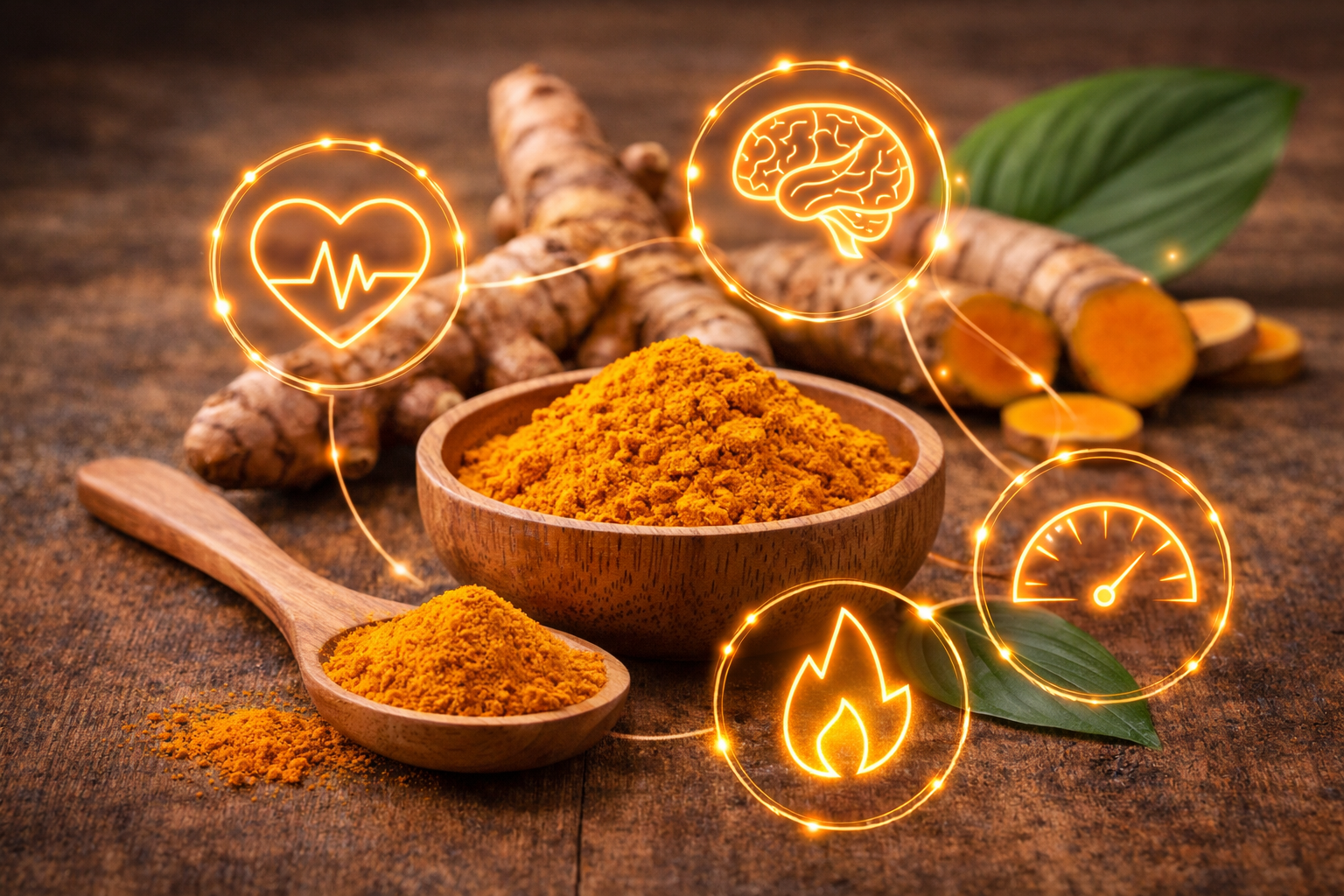
What Is Lakadong Turmeric Powder, And Why Do Traders Ask For It By Name?
Most turmeric moves through the wholesale trade as a generic commodity — "turmeric powder," full stop, with the growing region rarely mentioned beyond the country of origin. Lakadong turmeric works differently. It's grown in the Jaintia Hills of Meghalaya, in India's northeast, and organic turmeric powder traders and distributors increasingly ask for it specifically by that name rather than treating it as an interchangeable substitute for any other organic turmeric powder on a supplier's list.
What sets it apart isn't packaging or marketing — it's the rhizome itself. Turmeric grown in this belt tends to carry a naturally higher curcumin content than turmeric grown in most other regions, along with a deeper orange-red colour that's noticeable even before a lab test confirms it. For a wholesaler, that translates into a product that performs consistently in a customer's formulation or repack line, lot after lot, without needing to blend it with a stronger batch to hit a target spec.
None of that removes the need for due diligence. "Lakadong" describes where and how the turmeric was grown — it doesn't replace the paperwork. Any trader offering it in bulk should still be able to produce a Certificate of Analysis and a curcumin certification specific to the lot being sold, which is the part of the transaction that actually protects a distributor's reorder relationship with their own customers.
A supplier calling their stock "Lakadong" is making a sourcing claim, not offering proof of it. Ask which growing cooperative or belt the lot came from, then match that answer against the COA and curcumin certification for that exact lot — not paperwork carried over from a previous shipment.
The Quality Parameters Every Lakadong Lot Should Clear
For a trader or distributor, curcumin percentage is only one line on the report. A lot can test high on curcumin and still be inconsistent on moisture, colour or purity — any of which can affect shelf life, appearance once repacked, or how the powder behaves in a customer's formulation. This is roughly how each lot is scored before it's cleared for wholesale supply.
Internal Quality Scoring — Lakadong Turmeric Powder
Each score reflects how a lot's COA and curcumin certification results compare against our accepted range, not the raw curcumin percentage on its own.
Why Organic Turmeric Powder Traders and Distributors Add Lakadong to Their Line
Stocking a named-origin turmeric changes the conversation a wholesaler has with their own buyers, and it usually simplifies more of the supply relationship than it complicates.
Retailers, formulators and repackers increasingly search for Lakadong turmeric by name, giving a distributor a product their customers are already looking for.
Naturally higher, more stable curcumin content means less need to reblend or requalify a formulation each time a new lot arrives.
A Certificate of Analysis and curcumin certification travel with each lot, giving a wholesaler documentation they can hand straight to their own customer.
Packed in trade and distribution-friendly formats from the outset, rather than repackaged from a retail-only supply chain.
Curcumin Content: Lakadong Turmeric Powder vs Other Trade Grades
Curcumin percentage is usually the first number a formulator or nutraceutical buyer asks a distributor for, since it drives both potency and how far a given quantity goes in a finished product. Here's roughly how Lakadong compares with the other grades commonly moving through the organic turmeric trade.
Curcumin Content by Trade Grade
Approximate curcumin percentage, dry-weight basis. Always confirm the actual figure against the Certificate of Analysis for the specific lot you're buying.
Trader-Grade
Blend
Mix
Turmeric Powder
The Documentation a Trader Should Hand Over With Every Lot
A distributor's reputation with their own customers rests on being able to answer one question without hesitation: what's actually in this bag? That's what lot-level documentation is for, and with Lakadong turmeric powder, two documents do most of the work.
Certificate of Analysis (COA)
A COA covers curcumin content, moisture and ash figures for that specific lot, generated fresh for each dispatch rather than reused from a previous shipment. It's the single most useful document for a wholesaler deciding whether a lot matches what a customer has been promised.
Curcumin Certification
A separate document confirming the tested curcumin potency of that batch, handed to whoever is buying so they can pass it along their own supply chain or support a formulation claim without arranging additional lab work themselves.
A COA from one shipment and a curcumin certificate from another tells you nothing about the bag in front of you. Both documents should reference the same lot or batch number, and a trader should be able to produce them before you commit to the order, not after it ships.
Spotting a Genuine Lakadong Lot From a Relabelled One
Because Lakadong turmeric commands more attention than generic stock, it's also more likely to get relabelled by suppliers looking to move a blended or lower-grade lot under a more recognisable name. A short check before confirming an order filters most of that out.
- A Certificate of Analysis issued for that specific lot, not a template reused across shipments
- A curcumin certification with a batch number that matches the COA
- A colour and aroma sample consistent with previously confirmed Lakadong shipments
- A trader willing to disclose which cooperative or growing belt the lot came from
- Moisture and ash figures included as standard, not provided only on request
- A sample matched to the actual bag being packed, not a generic reference sample
- The name "Lakadong" used with no lot-specific documentation to back it up
- A COA that's undated, unnumbered, or clearly reused from an earlier order
- Reluctance to share a curcumin certification alongside the COA
- Vague answers about the growing region when asked directly
- No moisture or ash content listed anywhere in the paperwork
- Pressure to confirm the order before a sample has been reviewed
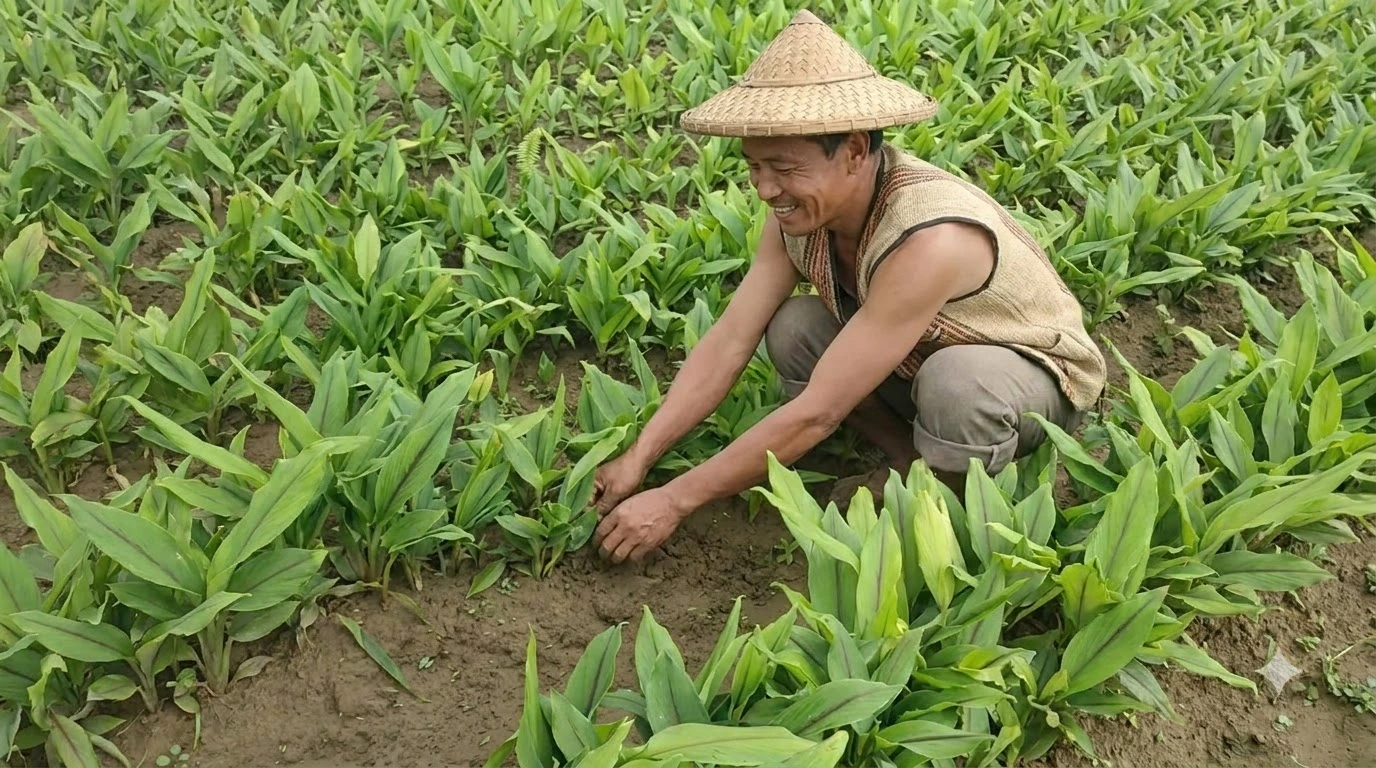
Every genuine Lakadong lot traces back to growing terrain like this — a named belt, not a blended, unspecified source.
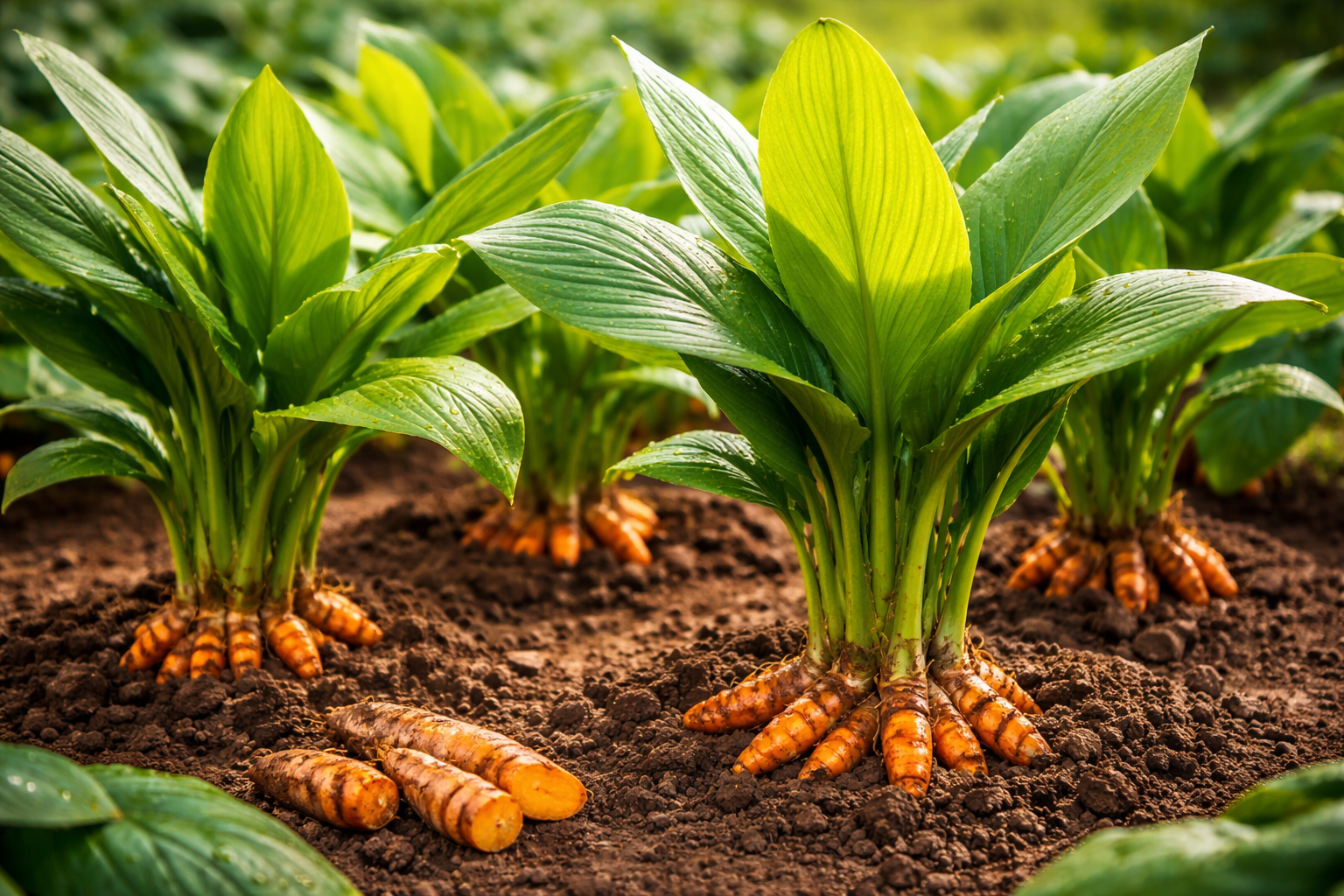
Rhizomes at harvest, before cleaning, drying, milling and lot-level testing for curcumin, moisture and ash.
Want a Sample Lot With Full Documentation?
We supply Lakadong turmeric powder to organic turmeric powder traders, wholesalers and distributors, with a lot-specific Certificate of Analysis and curcumin certification available on request.
Batch-to-Batch Curcumin Consistency Across Recent Lakadong Lots
For a distributor, one strong lab report matters less than knowing the next one will read the same. Wide swings in curcumin content between shipments create the kind of reformulation headaches that push a customer to a different supplier. Across the last six lots tested, readings have stayed in a fairly tight band rather than swinging widely from one shipment to the next.
Curcumin Readings — Last Six Lakadong Lots
Each point represents that lot's own Certificate of Analysis result at the time of testing.
Packaging Options for Traders, Wholesalers and Distributors
Packaging is usually chosen around how the buyer plans to move the product on — whether that's straight resale, private-label repacking, or blending into a larger formulation.
Small quantities for a distributor to test a new Lakadong lot with their own customers before committing to a full order.
The most common format for repeat trade orders, packed with a food-grade liner to protect curcumin content and aroma.
Palletised bag sets sized for distributors supplying several regional customers from a single order.
For traders and distributors working at volume, packed and sealed for direct onward resale without repacking.
All formats above use food-grade, moisture-barrier packaging as standard — this protects curcumin content and aroma in transit, regardless of order size.
How to Vet a Lakadong Turmeric Powder Trader Before You Order
A short verification step before committing protects a distributor from most of the problems that show up later — mismatched paperwork, inconsistent curcumin content, or a lot that isn't really what it was sold as.
- 🧾Ask for the COA and curcumin certification for the exact lot being offered, not a general company sample report.
- 🔍Match the batch numbers on both documents before confirming the order.
- 🧪Request a physical sample from the same lot, and check colour, aroma and texture against what you've received before.
- 📍Ask which growing cooperative or belt the lot is sourced from, and expect a specific answer.
- 📦Get packaging details in writing — format, net weight and liner type, before packing starts.
- 🔁Check recent lot-to-lot consistency, not just the single lot being quoted right now.
See a Real Lakadong COA & Curcumin Certificate
Want to see exactly what a lot-specific Certificate of Analysis and curcumin certification look like before you place a wholesale order? We're happy to share one.
FAQs — Lakadong Turmeric Powder
It's turmeric powder milled from rhizomes grown in the Jaintia Hills of Meghalaya, a growing belt known for naturally higher curcumin content and a deeper colour than most commercial turmeric. Traders and distributors typically source it as a distinct, named product rather than treating it as interchangeable with generic turmeric powder.
The "organic" part refers to how it was farmed — without synthetic pesticides or fertilisers. "Lakadong" refers to where it was grown. A lot can be organic without being Lakadong, and the two things should be confirmed separately: farming practice through the supplier's sourcing information, and quality through that lot's Certificate of Analysis and curcumin certification.
At minimum, a Certificate of Analysis covering curcumin, moisture and ash content, and a separate curcumin certification confirming potency for that specific lot. Both should reference the same batch number, and a trader should be willing to share them before you confirm the order.
Yes, most wholesale and distribution orders are unbranded at the point of sale, which lets the buyer repack or private-label it. This is exactly why lot-specific documentation matters more than the packaging itself at the wholesale stage.
More consistent than blended commodity turmeric, since it comes from a defined growing belt rather than pooled sources — but "more consistent" isn't "identical." Every lot still varies slightly with harvest conditions, which is exactly why each one gets its own Certificate of Analysis rather than relying on a single reference report.
Options usually range from small trial pouches for testing a new lot, up through standard wholesale bags and palletised distributor formats, to jumbo bulk bags for high-volume buyers. All use food-grade, moisture-barrier packaging regardless of size.
Start with a sample request matched to a live lot, along with its Certificate of Analysis and curcumin certification. From there, most partnerships move to a trial order before scaling into a repeat wholesale or distribution arrangement.
So, What Should a Trader or Distributor Actually Look For?
Whether you're placing a small trial order or setting up a standing wholesale arrangement, the checks are the same: a Certificate of Analysis and curcumin certification matched to the specific lot, a clear answer about which growing belt the turmeric came from, and packaging suited to how you'll actually move it on to your own customers.
None of that changes with order size. A trial pouch deserves the same documentation as a full pallet order — it's what you eventually hand to your own buyer that determines whether the relationship becomes a repeat one.
- 🧾Confirm the COA — curcumin, moisture and ash figures matched to the lot you're actually buying.
- 🧪Get the curcumin certification — with a batch number that lines up with the COA.
- 📍Ask where it's grown — a specific cooperative or belt, not a vague regional claim.
- 📦Match packaging to your resale plan — trial pouches, wholesale bags or bulk formats.
- 🔁Check lot-to-lot consistency — ask about recent batches, not just the one on offer.
We work directly with farming cooperatives in the Jaintia Hills to supply Lakadong turmeric powder to organic turmeric powder traders, wholesalers and distributors, with a Certificate of Analysis and curcumin certification on every lot. Reach out through the form above to start a wholesale or distribution conversation.