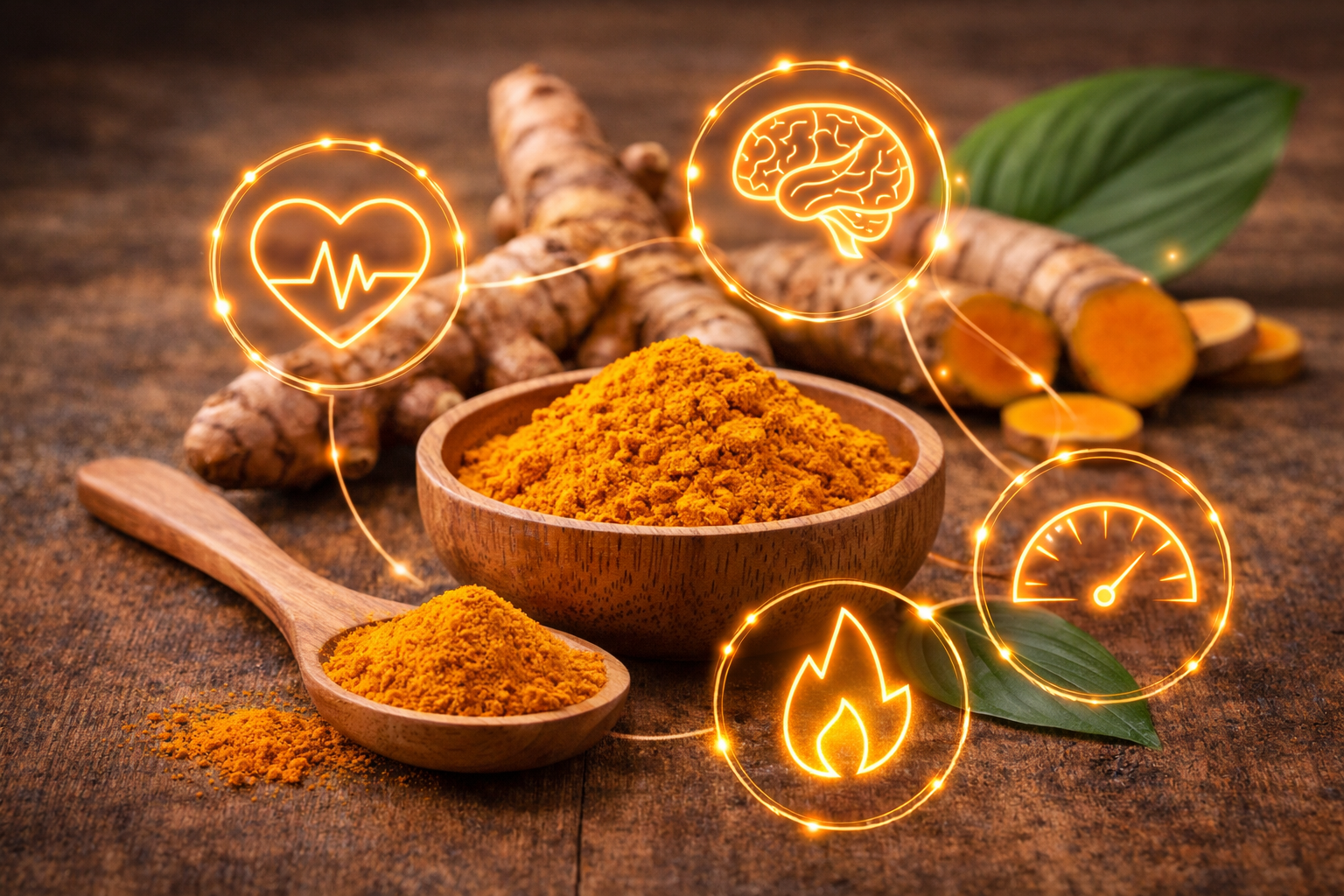
What Is High Curcumin Lakadong Turmeric Powder?
Curcumin is the compound family — technically curcuminoids — responsible for much of turmeric's deep colour and most of its reputation. Ordinary commodity turmeric typically averages somewhere between 2% and 4% curcumin, depending on the variety and how it was grown, which is a fine baseline for everyday cooking but not always enough for buyers who need a documented, higher-potency ingredient.
Lakadong turmeric, grown in the Jaintia Hills of Meghalaya, is known among spice traders and formulators for regularly testing higher than that baseline. Verified lots commonly fall in the 6% to 9% curcumin range, and select, carefully harvested batches have been lab-confirmed even higher. That's a meaningful jump from commodity-grade turmeric, and it's the reason this origin gets sought out specifically by buyers who care about potency, not just flavour.
It's worth being precise about what "high curcumin" actually means here: it's a measurable lab result tied to one specific batch, not a permanent trait that automatically applies to every bag with the name Lakadong on it. Growing conditions, harvest timing and drying method all influence the final percentage — which is exactly why a batch-specific lab report matters more than the name printed on the packaging.
Two bags labelled "Lakadong turmeric" can test differently depending on the harvest, the drying process and how the batch was handled afterward. Before you treat a product as genuinely high-curcumin, ask for the Certificate of Analysis and curcumin certification for that specific batch — not a number quoted from memory or from a previous season's harvest.
Where Lakadong Turmeric Sits on the Curcumin Scale
Curcumin percentage is usually the first thing a formulator, nutraceutical buyer or serious home cook wants to know, since it tells you how concentrated the powder actually is compared with ordinary turmeric sitting on a supermarket shelf. Seeing where Lakadong-grade turmeric typically lands on a wider scale makes that comparison easier to picture.
Curcumin Potency Gauge — Lakadong-Grade Turmeric
An indicative position of verified high-curcumin Lakadong lots on a 0–12% curcumin scale, alongside typical reference ranges for other turmeric grades.
(0–12% scale)
Why Curcumin Percentage Actually Matters
A higher curcumin percentage generally means the powder is more concentrated, which changes how much of it you actually need. In a supplement or functional food formulation, that affects the potency math per capsule or per serving. In a kitchen, it means a strongly curcumin-rich powder can go further than the same weight of a milder, lower-potency batch.
Curcumin-rich rhizomes also tend to produce a visibly deeper orange-red powder with a stronger, more resinous aroma than lower-curcumin commodity turmeric. That's a useful sensory cue, though it's not a substitute for an actual lab result — colour and smell can be influenced by other factors too, so they're a starting signal, not confirmation on their own.
Curcumin is also the compound most closely tied to turmeric's long-standing reputation in traditional use, and it's widely studied in nutrition and wellness research. That's part of why nutraceutical brands, functional beverage makers and wellness-focused kitchens specifically go looking for a documented curcumin figure rather than settling for an unverified "high potency" claim.
Curcumin Content Across Turmeric Grades
Laid out side by side, the gap between ordinary commodity turmeric and verified high-curcumin Lakadong lots becomes much easier to see — and it's a useful reference point when you're comparing a quoted percentage against what's realistic for the category.
Curcumin % by Turmeric Grade
Representative midpoint values for each category, shown on a common scale. Every real batch should still be confirmed on its own Certificate of Analysis.
What Makes Lakadong Turmeric Naturally Run High in Curcumin
A large part of the answer comes down to geography. Turmeric grown in the Jaintia Hills belt of Meghalaya benefits from hill altitude, a distinctive red loamy soil composition, and a native rhizome variety that local farming families have cultivated for generations. That combination of terrain and lineage is what spice buyers point to when they talk about this origin testing consistently higher than turmeric grown elsewhere.
Farming practices matter just as much as the land itself. Traditional, low-input cultivation without heavy synthetic fertiliser use, combined with hand-harvesting the rhizomes once they've properly matured in the field, tends to protect the plant's natural compound development. Harvesting too early is one of the more common reasons a batch ends up testing lower than expected.
What happens after harvest matters too. Slow, low-temperature drying — rather than fast, high-heat industrial drying — helps preserve curcuminoid content, since excess heat is one of the easiest ways to diminish it after the rhizomes come out of the ground. Careful stone or steel milling and fine sieving then keep the finished powder consistent from batch to batch.
A genuinely high-curcumin Lakadong lot should be traceable back to rhizomes grown in the Jaintia Hills belt, not blended with unrelated stock from elsewhere and sold under the same name. If a supplier can't tell you roughly where and when a batch was grown, treat the curcumin number attached to it with more caution.
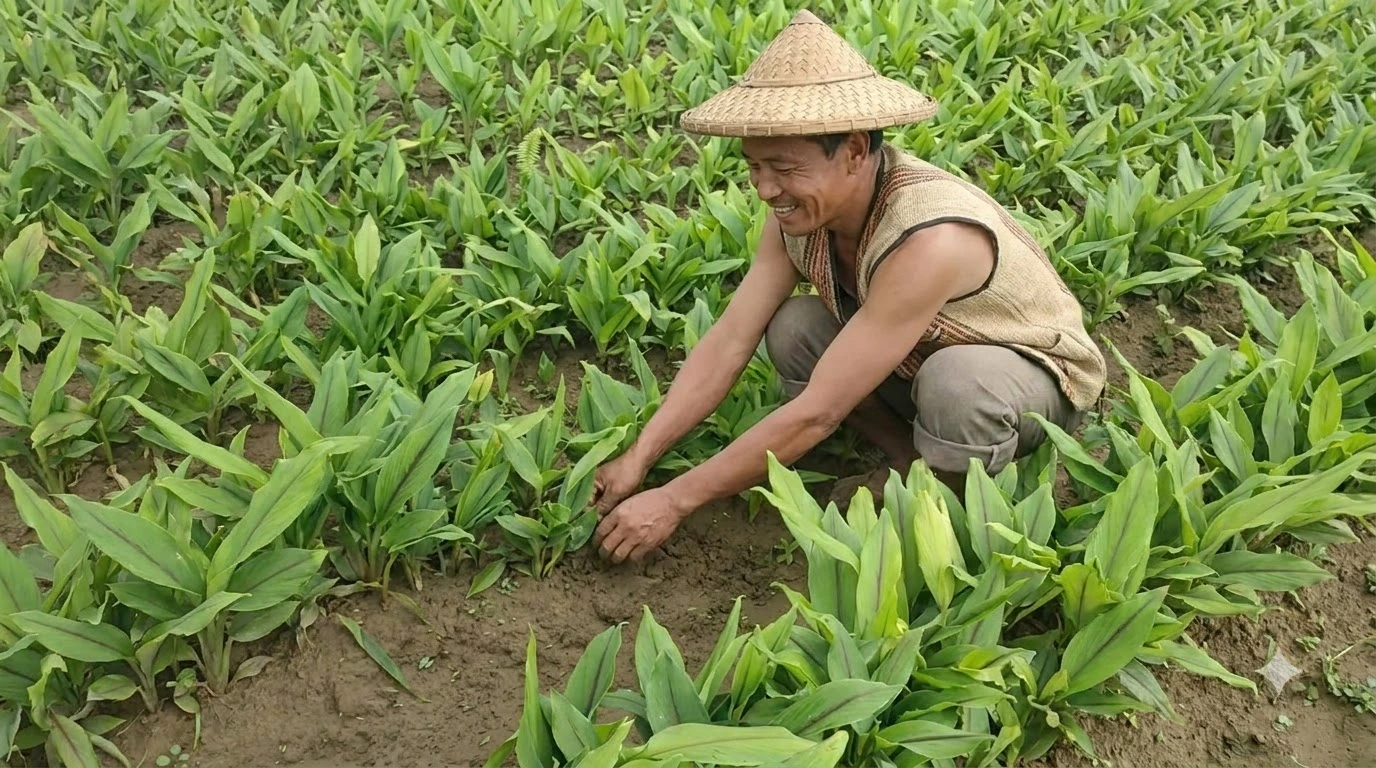
The hill terrain and soil of the Jaintia Hills belt are closely linked to Lakadong turmeric's naturally elevated curcumin content.
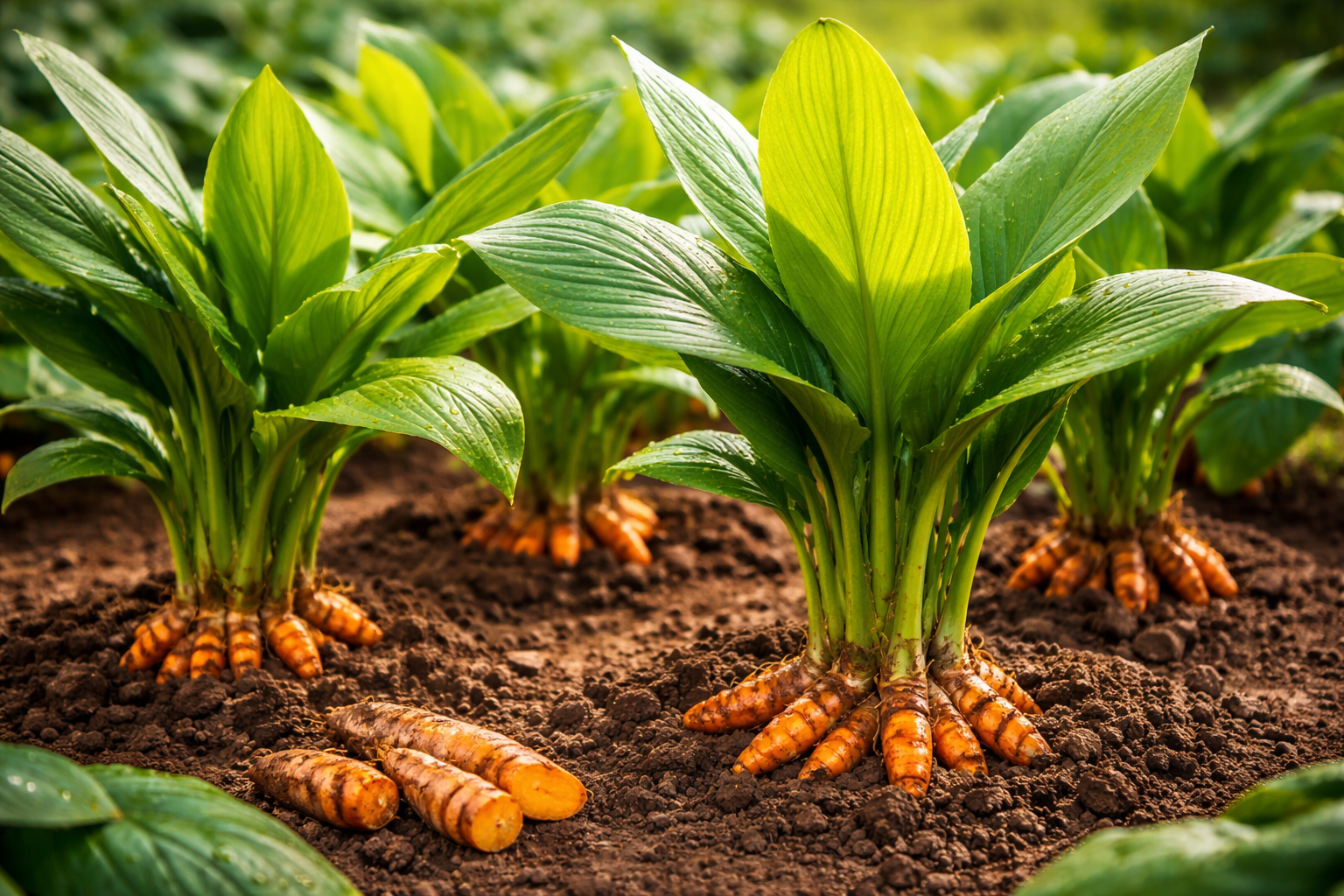
Rhizomes harvested at full maturity, before slow drying and milling into high-curcumin powder.
How Curcumin Content Is Verified: COA & Curcumin Certification
A Certificate of Analysis, or COA, is a lab report generated for a specific batch. For turmeric, it typically lists the curcumin percentage — usually measured using HPLC (High-Performance Liquid Chromatography), a standard analytical method for accurately quantifying curcuminoid content — along with moisture content, ash content and particle size or mesh fineness.
A curcumin certification is a related but separate document: it specifically confirms the tested curcumin percentage for that exact lot. It's especially useful when a buyer needs to demonstrate potency to their own customers, their formulation team, or an internal quality process, without having to dig the figure out of a longer combined report.
The detail that trips buyers up most often is matching. Both documents should reference the same batch or lot number as the powder actually being shipped. A report from a different harvest, or one with no batch reference at all, doesn't tell you anything reliable about the specific bag in front of you.
A curcumin percentage only means something if it's tied to the batch you're actually buying. Before you rely on a number, check that the COA and curcumin certification you've been given reference the same lot or batch code as the product itself, not a general figure reused across every order.
Genuine High-Curcumin Lakadong vs. an Unverified Claim
A quick way to sense-check any high-curcumin claim before you buy is to compare it against these two lists.
- A curcumin percentage backed by a batch-specific Certificate of Analysis
- A dedicated curcumin certification referencing the same lot number
- Moisture and ash figures listed alongside the curcumin percentage, not just one number on its own
- A supplier who can describe roughly where and when the batch was grown and processed
- A willingness to share the lab report before you place the order, not only after
- Consistent, traceable batches, rather than one "hero" number quoted for every order regardless of harvest
- A curcumin percentage with no lab report attached, or a report carrying no batch number
- The exact same curcumin figure repeated for every batch regardless of season
- No mention of how, when or by which method the sample was tested
- Reluctance to share the actual Certificate of Analysis or curcumin certification on request
- A number that sits far outside typically reported ranges, with no documentation to back it up
- Vague or shifting answers about where the turmeric was actually grown
High-Curcumin Lakadong Grade vs. Standard Turmeric Powder
Beyond the headline curcumin figure, a handful of other specifications tend to move together with it. Here's how a verified high-curcumin Lakadong batch typically compares with standard turmeric powder on the specs that matter to a buyer.
Specification Comparison
A general comparison based on commonly reported characteristics. Confirm exact figures against the batch-specific COA before ordering.
| Specification | High-Curcumin Lakadong Grade | Standard Turmeric Powder |
|---|---|---|
| Curcumin Content | 6–9% (lab-verified) | 2–4% |
| Colour | Deep orange-red | Pale to medium yellow-orange |
| Aroma | Strong, earthy, resinous | Mild, mostly neutral |
| Moisture | Below 8%, batch-tested | Varies, often unverified |
| Particle Size | Fine, consistent mesh | Varies by supplier |
| Batch Documentation | COA + curcumin certification per lot | Often unavailable |
Want to See a Real Batch's Curcumin Report?
Ask us for the Certificate of Analysis and curcumin certification for a current high-curcumin Lakadong batch before you decide. Every lot we pack is tested and documented individually.
From Harvest to Powder: How Curcumin Potency Is Preserved
Curcumin content isn't only decided in the field — how the rhizomes are handled after harvest plays just as large a role in what ends up on the final Certificate of Analysis.
Who Uses High-Curcumin Lakadong Turmeric Powder
A documented curcumin percentage is useful to more than one type of buyer, and each tends to use it slightly differently.
Formulators who need a documented curcumin percentage to calculate accurate potency per capsule or serving.
Wellness shots, tonics and functional drinks where a stronger curcumin base means less powder needed per bottle.
Chefs and home cooks who notice the difference in colour and aroma that a higher-curcumin powder brings to a dish.
Cosmetic and skincare brands that value turmeric's naturally concentrated pigment and compound profile in formulations.
How to Choose a Genuine High-Curcumin Lakadong Batch
A short verification process before you commit protects against most of the common issues buyers run into with high-curcumin claims.
- 🔬Ask for the batch-specific COA before you commit, not after the order has already shipped.
- 📄Request the curcumin certification matched to the exact lot number on your invoice.
- 📊Compare the number against typical ranges — verified Lakadong lots commonly test in the 6–9% band; treat figures with no documentation, in either direction, with caution.
- 💧Check moisture and ash figures too — curcumin percentage alone doesn't tell you much about shelf life or purity.
- 📅Ask when the batch was tested — a lab report from an old harvest doesn't necessarily reflect what's in a bag packed months later.
- 📍Ask where the batch was grown — a genuine high-curcumin Lakadong lot should trace back to the Jaintia Hills growing belt, not an unnamed blend.
See What a Real Curcumin Certification Looks Like
Before you place an order, we're happy to share a sample Certificate of Analysis and curcumin certification from a current batch — so you know exactly what you're comparing against.
FAQs — High Curcumin Lakadong Turmeric Powder
Verified Lakadong-origin lots commonly test between 6% and 9% curcumin, with select lab-selected batches reported higher still. Curcumin content naturally varies between harvests and depends on how the batch was dried and handled, so the exact figure should always come from that batch's own Certificate of Analysis rather than a number quoted from memory or from a previous season.
It largely comes down to where and how it's grown. Turmeric cultivated in the Jaintia Hills of Meghalaya benefits from hill altitude, a particular soil composition and a native rhizome variety that local farming families have cultivated for generations, combined with traditional, low-input growing methods and careful post-harvest handling that helps protect curcumin content.
A representative sample from the milled batch is lab tested, commonly using HPLC (High-Performance Liquid Chromatography), which is a standard analytical method for measuring curcuminoid content accurately. The result is documented in a Certificate of Analysis alongside a dedicated curcumin certification for that specific lot.
Generally yes. Curcumin-rich turmeric tends to have a deeper orange-red colour and a stronger, more resinous aroma than lower-curcumin commodity powder. Because it's more concentrated, you may also need slightly less of it to reach the same intensity in a recipe or formulation, so it's worth adjusting quantities rather than substituting it one-to-one.
It's commonly sought out by nutraceutical, supplement and functional food brands specifically because a documented curcumin percentage makes potency calculations more accurate per capsule or serving. Formulators should request the batch-specific Certificate of Analysis and curcumin certification to confirm the exact figure for the lot they intend to use.
At minimum, ask for a batch-specific Certificate of Analysis covering curcumin, moisture and ash content, plus a dedicated curcumin certification confirming the tested percentage for that exact lot. Both documents should reference the same batch or lot number as the powder you're actually being offered.
Keep it sealed in an airtight container, away from direct sunlight, heat and moisture, ideally in a cool, dry place. Repeated exposure to air and light over time can gradually affect both colour and aroma, so resealing the bag or transferring it to an airtight jar after opening helps preserve it for longer.
So, What Should You Look For in High Curcumin Lakadong Turmeric Powder?
A genuinely high-curcumin Lakadong batch comes down to the same handful of checks every time: a curcumin percentage backed by a batch-specific Certificate of Analysis, a dedicated curcumin certification referencing that same lot, moisture and ash figures alongside the headline number, and a supplier who can trace the batch back to where it was actually grown.
None of that depends on how the product is marketed. A curcumin percentage is either documented for the exact batch you're buying, or it isn't — and that single distinction is usually enough to tell a genuine high-curcumin lot apart from an unverified claim.
- 🔬Demand the batch-specific COA — curcumin, moisture and ash figures, from a lab report tied to the actual lot.
- 📄Request the curcumin certification — confirming the tested percentage for that exact batch.
- 📊Check the number against typical ranges — verified Lakadong lots commonly test around 6–9%.
- 📍Confirm traceability — the batch should trace back to the Jaintia Hills growing belt, not an unnamed blend.
- 📅Ask when it was tested — so the lab report actually reflects the batch you're being offered today.
We work directly with farming families in the Jaintia Hills to process high-curcumin Lakadong turmeric powder, and test every batch in an accredited lab so the curcumin percentage on paper matches what's actually in the bag. Every lot comes with its own Certificate of Analysis and curcumin certification — ask us for both before you buy from anyone.