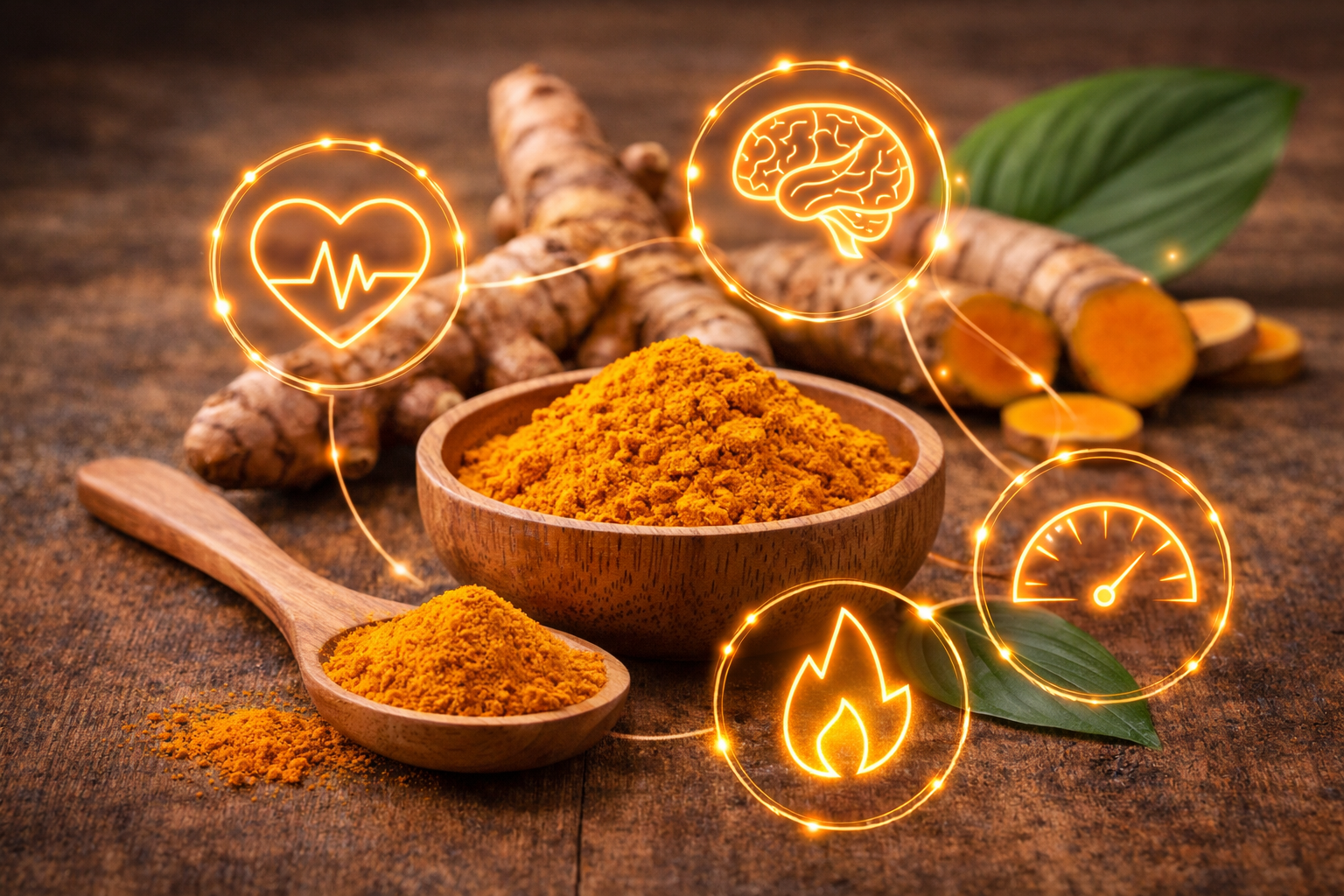
What Actually Makes Turmeric Curcumin Rich?
Curcumin is the compound family — technically curcuminoids — responsible for turmeric's golden color and much of what makes the spice worth talking about beyond flavor. But curcumin content isn't fixed the way a spice's name is. Two bags of turmeric powder can look, smell and even taste similar while sitting at very different curcumin percentages underneath.
Curcumin content is measured as a percentage on a dry-weight basis, almost always through a lab test rather than a visual check. That figure moves quite a bit depending on where the turmeric was grown, which cultivar it came from, and how it was processed after harvest — anywhere from around 1-3% in ordinary commodity turmeric up to 7-12% in select single-origin lots.
Unlike terms tied to a formal certification scheme, "curcumin rich" isn't a regulated label anyone can apply for. That's exactly why it matters more here, not less, that a supplier can back the claim with an actual lab report tied to the batch you're being offered — rather than a description on a product page.
Most retail turmeric powder never discloses a curcumin percentage at all, because most suppliers never test for it lot by lot. A real number only exists once that specific batch has been through a lab — everything before that is an estimate at best, and a guess at worst.
How Curcumin Content Varies Across Turmeric
Curcumin percentage sits on a spectrum rather than a fixed value, and where a given lot falls on that spectrum usually comes down to sourcing rather than branding.
Curcumin Content Across Turmeric Sourcing Tiers
Approximate dry-weight curcumin ranges by sourcing tier. Every real lot should still be confirmed on its own lab report before you rely on a figure like this.
Why Curcumin Content Is the Spec Buyers Ask For First
Curcumin percentage isn't just a lab-report number — it shows up in how the powder actually performs once it's in a formulation, a kitchen, or a package.
Supplement and nutraceutical brands need a verified curcumin percentage to calculate dosage per capsule or serving with any confidence.
A higher curcuminoid profile shows up visually — a richer, more saturated golden-amber tone in golden milk, curries and natural dye work.
Curcumin-rich turmeric tends to carry a more pronounced, earthy aroma than diluted commodity stock, even before it's cooked.
A verified curcumin percentage gives private label brands a real, defensible specification to put on their own packaging.
What Actually Influences Curcumin Content
Curcumin percentage isn't random — it's shaped by a handful of factors that start well before the turmeric is ever milled into powder, and continue right up to how it's stored afterward.
What Actually Moves the Curcumin Percentage
Some factors swing curcumin content more than others. A general guide to which ones tend to matter most, based on how turmeric is typically grown and processed.
How Curcumin Rich Turmeric Is Actually Verified
Since curcumin richness isn't a certification scheme the way organic farming is, the only real way to confirm it is documentation tied to the specific lot in front of you — not a description, not a photo of a lab, and not a figure carried over from a previous harvest.
Lab-tested results for that specific lot — curcumin percentage, moisture and ash content, along with other standard quality parameters relevant to that batch.
A dedicated lab confirmation of curcuminoid potency, tied to the same harvest lot being packed and shipped — not a generic, company-wide average.
Most labs quantify curcuminoid content using HPLC (High-Performance Liquid Chromatography), a precise analytical method that produces an actual percentage rather than an estimate. It's worth asking whether the lab behind your COA is NABL-accredited — that confirms the testing lab itself meets a recognised accreditation standard, independent of what the supplier says about their own product.
"Curcumin rich" printed on packaging, a product description, or a sales conversation isn't the same as a lab-verified percentage. Before confirming an order, ask specifically for the COA and Curcumin Certification tied to the lot you'd actually be receiving.
Signs of a Genuinely Curcumin-Rich Lot
A short verification pass before committing to an order tends to catch most of the gaps buyers run into later.
- A batch-specific Certificate of Analysis with an actual curcumin percentage, not a rounded estimate
- A separate Curcumin Certification matched to that same harvest lot
- Moisture and ash figures alongside the curcumin percentage, not curcumin content alone
- Willingness to say which lab ran the test and how it was measured
- A pre-shipment sample available for approval before the full order is packed
- Traceability to a named growing region rather than a vague, unspecified source
- A curcumin percentage quoted with no lab report to back it up
- The same "curcumin rich" figure repeated across every harvest and season
- Reluctance to share the COA or Curcumin Certification before you confirm the order
- A report that doesn't specify moisture or ash content alongside curcumin
- No willingness to send a sample matched to the actual lot being offered
- Vague answers when asked which lab or method was used for testing
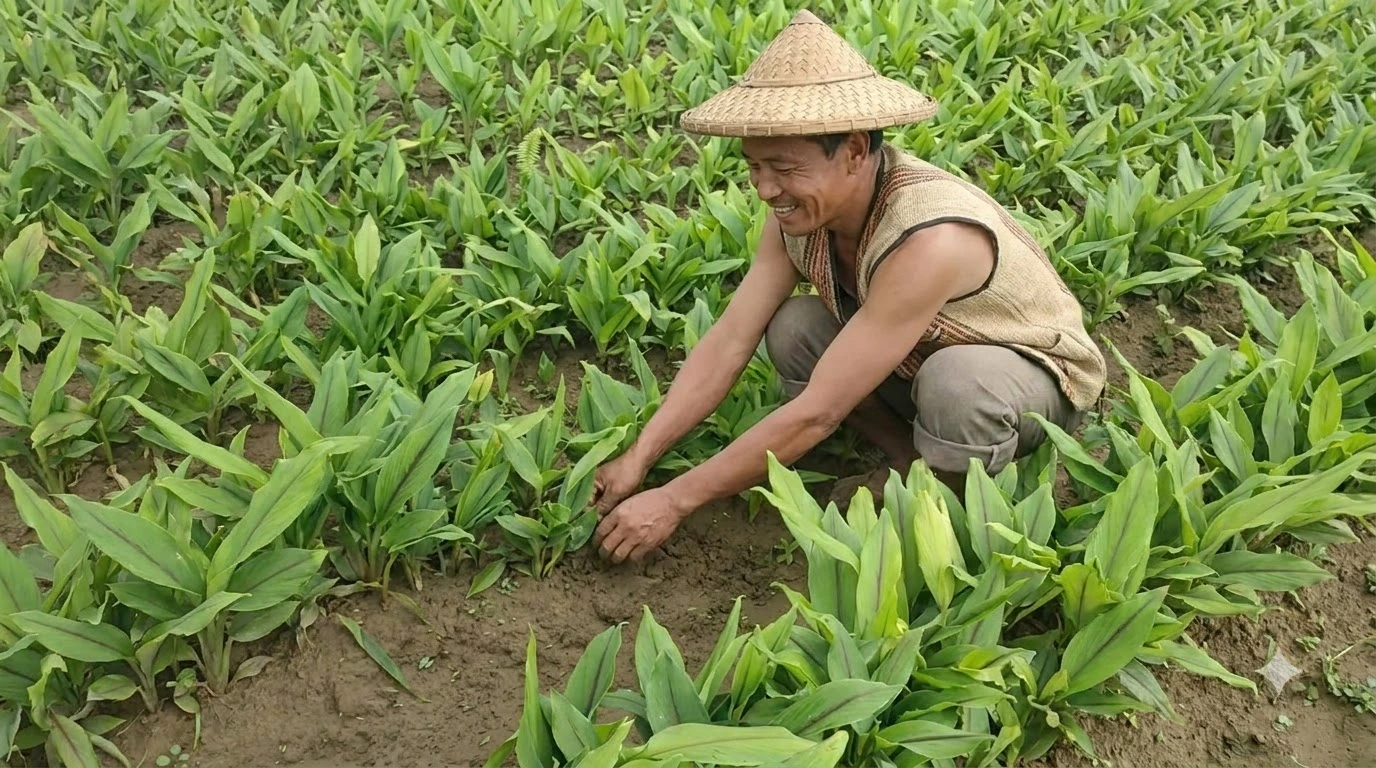
Altitude, soil and rainfall in a growing region all play a role in how curcumin-rich the final powder turns out.
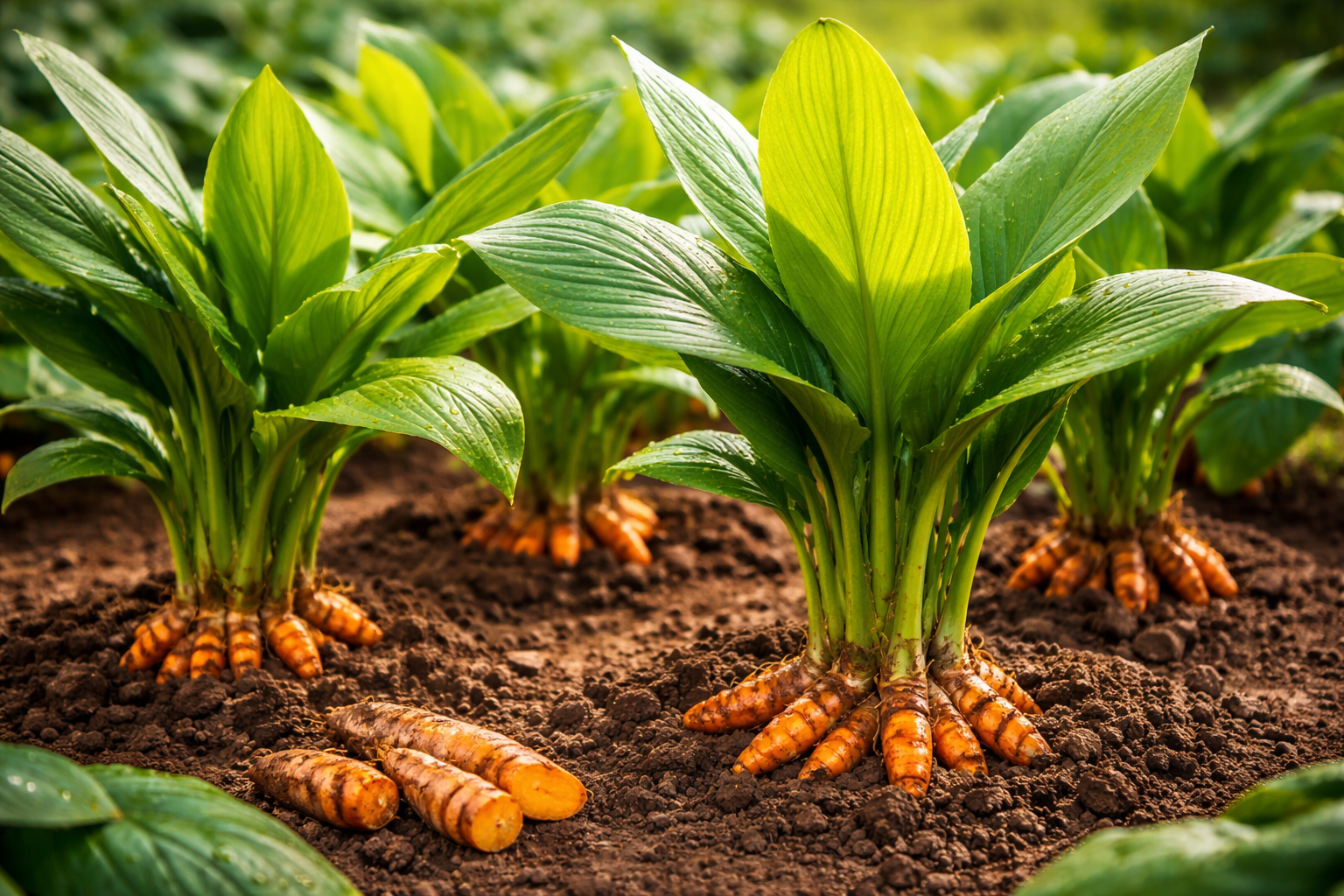
Rhizome maturity at harvest is one of the biggest single factors behind a genuinely high curcumin percentage.
Want to See a Real Curcumin Certification First?
We can share a lot-specific COA and Curcumin Certification for our current harvest before you commit to a trial or bulk order.
Curcumin Rich Turmeric vs. Regular Turmeric Powder
Laid side by side, the practical differences between a verified curcumin-rich lot and ordinary commodity turmeric powder become easier to see.
Curcumin Rich Turmeric vs. Regular Turmeric Powder
A general comparison — the only way to confirm either column for a specific shipment is a lot-specific Certificate of Analysis.
Everyday Uses for Curcumin Rich Turmeric
A stronger curcuminoid profile isn't just a lab-report detail — it changes how the powder behaves once it's actually being used.
A smaller pinch of curcumin-rich powder delivers the same depth of color and flavor as a larger amount of diluted commodity turmeric.
Nutraceutical brands rely on a verified curcumin percentage to keep dosage consistent from one production batch to the next.
Curries, rice dishes and roasted vegetables pick up a noticeably deeper color and more rounded flavor from a curcumin-rich powder.
Traditionally used in warm drinks and simple at-home routines, where a stronger curcuminoid profile is often preferred.
How to Vet a Curcumin Rich Turmeric Supplier
Before confirming an order built around a curcumin-rich claim, a short checklist protects against most of the common gaps.
- 📄Ask for a lot-specific Certificate of Analysis showing the actual curcumin percentage for that batch, not a catalog average.
- 🧾Request the Curcumin Certification tied to the exact harvest lot being packed and shipped.
- 🔬Confirm the testing method — HPLC is the industry-standard method for quantifying curcuminoid content.
- 📍Ask where it was grown — traceable, single-origin sourcing tends to show more consistent curcumin levels than blended stock.
- 🧪Request a small sample matched to the actual lot before committing to a larger order.
- 💧Check moisture and ash figures alongside curcumin percentage — both affect shelf life and formulation performance.
Curious How Curcumin-Rich Our Lakadong Turmeric Really Is?
Every harvest lot is lab-tested for curcumin content before it's packed — ask us for the current batch's actual numbers.
FAQs — Curcumin Rich Turmeric
It means turmeric that tests meaningfully higher in curcuminoid content than ordinary commodity turmeric powder, confirmed through lab testing rather than a packaging claim. Unlike "organic," curcumin richness isn't a formal certification, so the number only means something when it comes from a lot-specific lab report.
There's no single official threshold, but in practice, turmeric testing above roughly 5% curcumin on a dry-weight basis is generally considered curcumin rich, with select single-origin lots reaching 7-12%. Ordinary commodity turmeric typically sits closer to 1-3%.
Most labs use HPLC (High-Performance Liquid Chromatography) to quantify curcuminoid content precisely. That figure should appear on a lot-specific Certificate of Analysis rather than being estimated or carried over from a previous harvest.
Not necessarily. Organic describes the farming method, not the curcuminoid yield, so an organically grown lot and a curcumin-rich lot are two separate specifications. Each one deserves its own documentation rather than assuming one implies the other.
Turmeric from the Jaintia Hills region, often sold under the Lakadong name, is generally associated with a stronger curcuminoid profile than blended commodity turmeric. The exact figure still varies lot to lot and should be confirmed on that specific batch's own lab report.
Yes. A serious supplier should be able to provide both a Certificate of Analysis and a dedicated Curcumin Certification for the specific lot being offered, ahead of any commitment, not just after the order ships.
Since curcumin-rich turmeric is more concentrated, a smaller quantity often delivers a comparable color, aroma and flavor intensity compared to a diluted commodity powder. That's worth keeping in mind when substituting it directly into an existing recipe or formulation ratio.
So, What Should You Look For in Curcumin Rich Turmeric?
A genuinely curcumin-rich turmeric powder comes down to the same handful of checks every time: a lot-specific Certificate of Analysis showing the actual percentage, a dedicated Curcumin Certification tied to that same harvest lot, moisture and ash figures alongside the curcumin number, and traceability back to a named growing region rather than a vague, blended source.
None of that depends on order size. A small trial pouch deserves the same documentation as a full production lot — the difference is simply how much is riding on getting the number right.
- 📄Ask for the COA — curcumin, moisture and ash figures, tied to the exact lot being offered.
- 🧾Request the Curcumin Certification — a dedicated lab confirmation, not a generic company claim.
- 🔬Confirm the testing method — HPLC results are the standard buyers should expect to see.
- 📍Ask about traceability — single-origin sourcing tends to hold a more consistent curcumin percentage.
- 🧪Request a matched sample — from the same lot, before the full order is confirmed.
We source curcumin-rich lakadong turmeric powder directly from Jaintia Hills growing cooperatives, with a lot-specific Certificate of Analysis and Curcumin Certification available on every shipment — plus private label options for brands that want a verified potency figure on their own packaging.