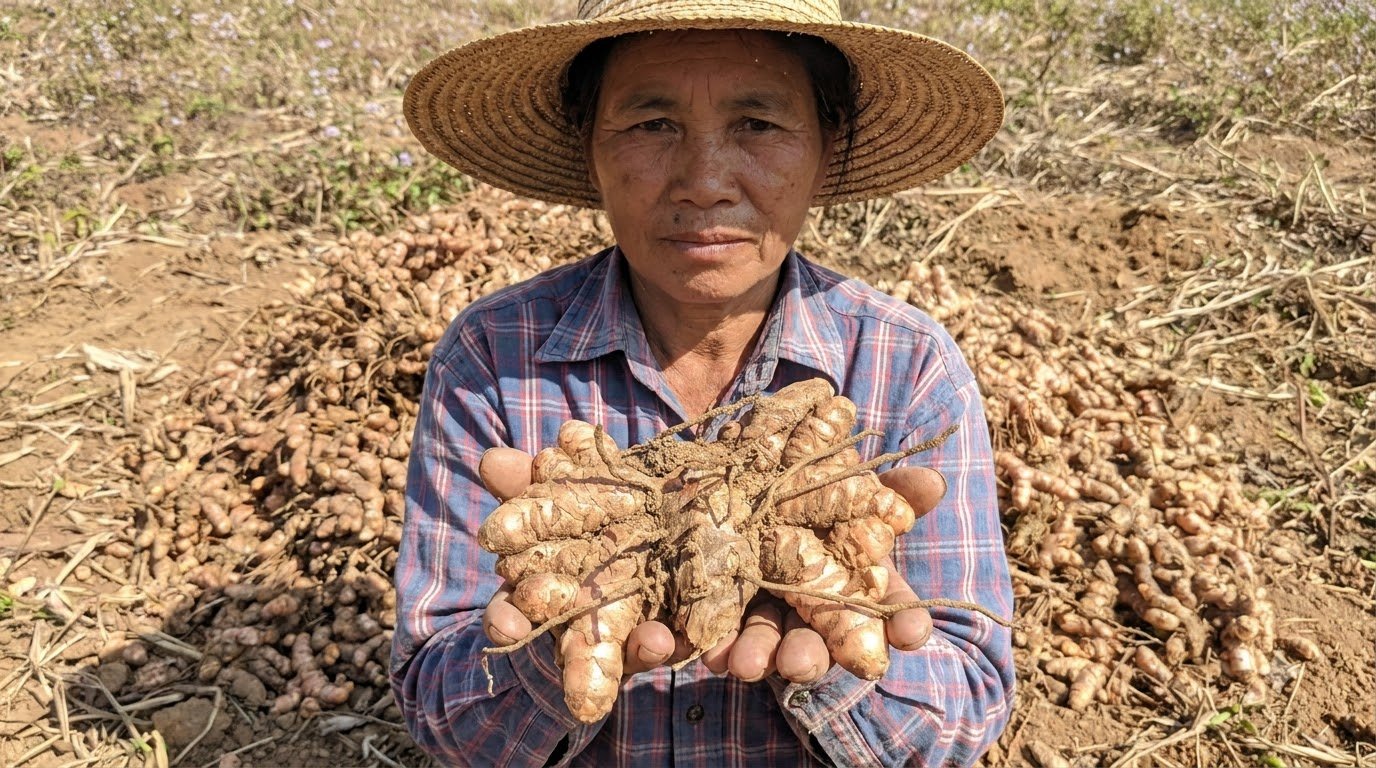
What Is Jowai, and Why Does It Matter for Turmeric Sourcing?
Jowai is the headquarters town of West Jaintia Hills district in Meghalaya — not a single farm or plantation, but the administrative and trading centre for a wide belt of turmeric-growing villages spread across the surrounding hills. For a crop grown almost entirely on smallholder plots rather than large estates, a defined town like Jowai plays an outsized role: it's typically where harvested rhizomes from many separate farms are first brought together, before anything is cleaned, tested or packed for a buyer.
That distinction matters more than it sounds. Two suppliers can both describe their turmeric as coming "from Meghalaya," but one might mean lots pooled from farms with no shared collection point or testing checkpoint at all, while the other means turmeric that passed through a specific, traceable stage — grown in Jaintia Hills villages, brought into Jowai, and tested lot by lot before it goes anywhere near an export carton. When international buyers ask questions about sourcing, that middle step is usually what they're actually asking about.
This guide treats Jowai sourcing as shorthand for that whole chain — farm, aggregation point, lab, and pack-out — and looks at what needs to be true at each stage for the turmeric at the end of it to genuinely support international export.
Jowai isn't a certification or a variety name — it's a place. When a supplier says turmeric is sourced through Jowai, ask what that means in practice: which villages feed into it, how lots are kept separate, and what testing happens before dispatch. A specific answer is a good sign; a vague one usually means the claim is more marketing than process.
Why Sourcing Through a Defined Hub Like Jowai Changes What You Can Verify
When turmeric moves through a known aggregation point before export, buyers gain something that's hard to get from open-market purchasing: a fixed stage where every lot can be traced, tested and kept separate from the rest. The comparison below is a general pattern worth asking a supplier about — not a rating of any single company.
Sourcing Structure: Jowai-Anchored vs Open-Market Aggregation
An illustrative pattern comparing turmeric sourced through a fixed collection and testing point against turmeric pooled from unspecified, mixed sources. Always confirm any specific claim against that lot's own lab documentation.
Where Jowai Sits, and Why the Location Helps Export Logistics
Jowai lies along the main hill highway that links the Jaintia Hills to Shillong and onward toward Guwahati, the principal transport gateway for goods moving out of India's northeast. For turmeric grown on farms scattered across steep, terraced terrain, that road connection is not a minor detail — it's what determines how quickly a harvested lot can move from a village plot to an aggregation point, and from there toward a freight-forwarding hub.
In practical terms, this shortens the distance between three things that usually sit far apart for smallholder-grown spices: the farm, the testing lab, and the road network that eventually connects to a port or airport. A sourcing chain anchored at Jowai keeps those stages closer together, which is part of what makes consistent international export planning realistic rather than aspirational.
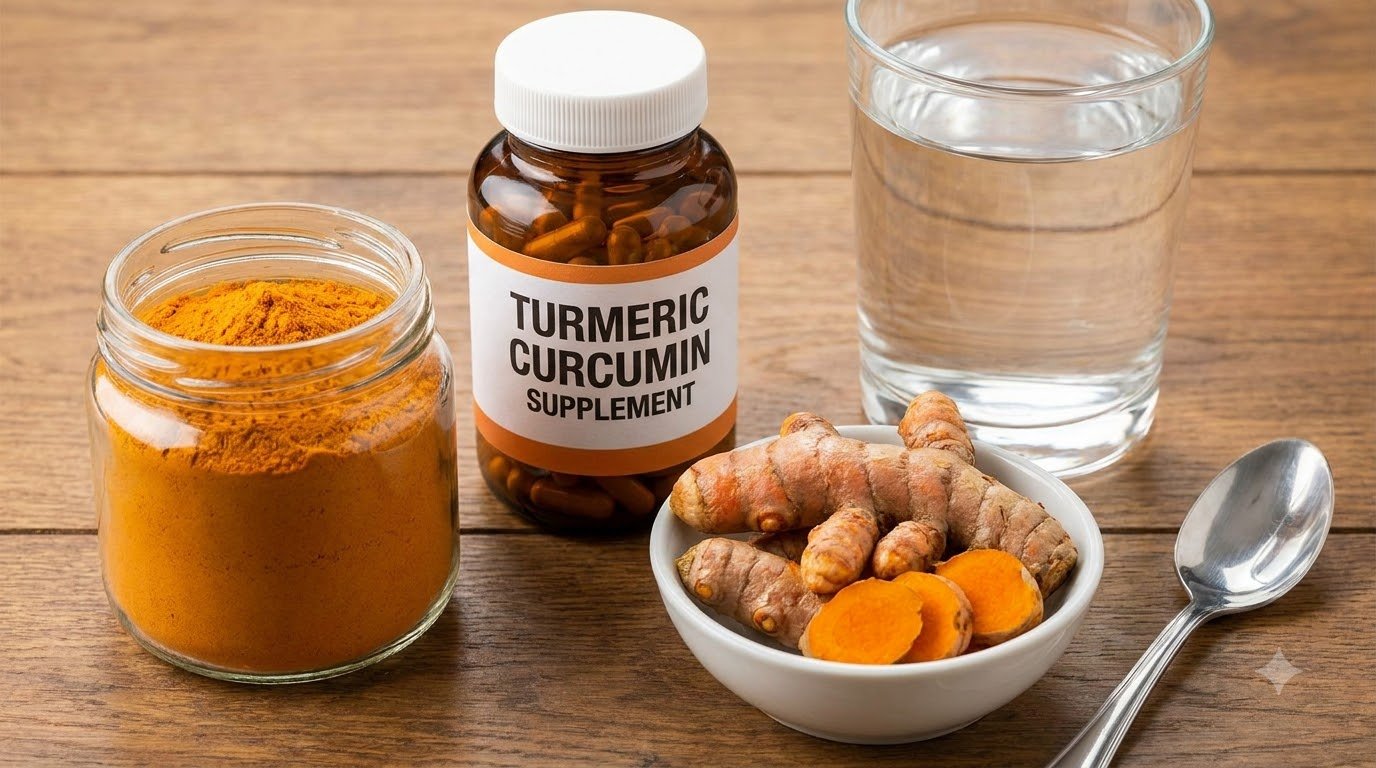
Jowai, the West Jaintia Hills district headquarters, where turmeric from surrounding villages is aggregated before testing and export packing.
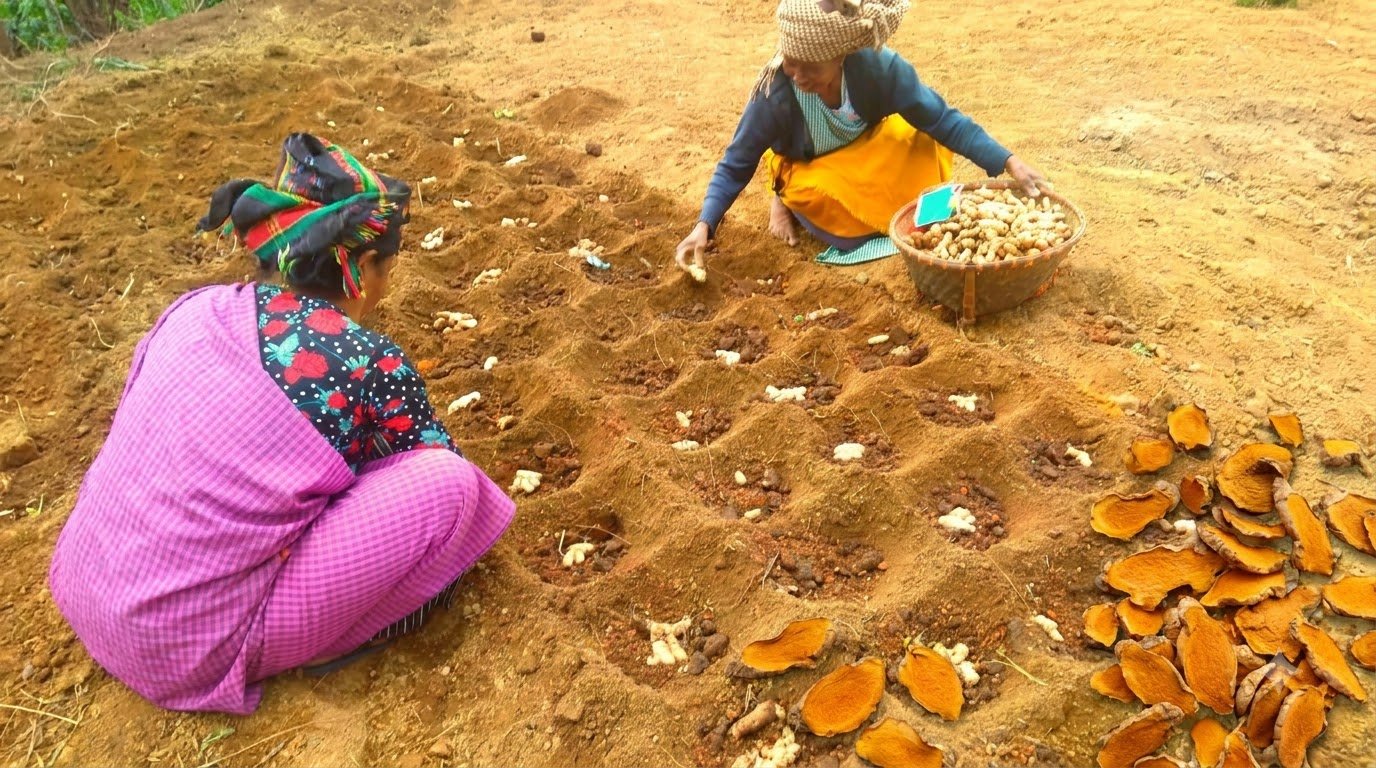
Rhizome lots collected from separate farms, kept apart and labelled before cleaning and testing begin.
From Jowai Collection to an Export-Ready Container
Behind any claim of international export capability is a sequence of unglamorous steps. Here's the general path most turmeric follows between a Jaintia Hills farm and a container ready for international dispatch.
Typical Sourcing-to-Export Sequence
A general sequence most turmeric follows on its way from harvest to international dispatch. Exact timelines vary by order size and destination.
The Lab Documents That Should Travel With Every Jowai-Sourced Lot
For turmeric that's actually intended for international buyers, three documents typically matter more than anything else in the listing description.
Certificate of Analysis (COA)
A lot-specific report covering curcumin percentage, moisture and ash content for the exact batch on offer — not a general figure reused across different shipments.
Curcumin Certification
A separate, lab-confirmed potency figure for that batch, useful whenever curcumin content is central to why a buyer is choosing this turmeric over a cheaper, unspecified alternative.
Residue-Free Certification
Confirmation that the tested lot came back clear of pesticide residue — often one of the first things an import compliance team checks before a shipment is cleared.
None of these documents are difficult for a genuine Jowai-sourced supplier to produce, because the testing happens as part of the process rather than after a buyer asks for proof. If a supplier hesitates to share lot-matched versions of all three, that's usually the clearest warning sign available.
What International Export Capability Should Actually Include
"International export capability" gets used loosely. In practice, for a spice like Lakadong turmeric sourced through Jowai, it should mean a specific set of operational things are already in place — not promised for "the right order size."
That usually comes down to packing flexibility, sample-first ordering, consistent documentation regardless of order size, and communication that actually works across time zones and languages.
- 📦Packing formats sized for container loading, not just retail bags.
- 🧾Sample or trial quantities available before a bulk commitment.
- 🔬Lot-matched COA, curcumin certification and residue-free certification for every shipment size.
- 📞Clear, responsive communication through the sourcing and dispatch process.
- 📍Willingness to discuss village-level origin rather than "Meghalaya" alone.
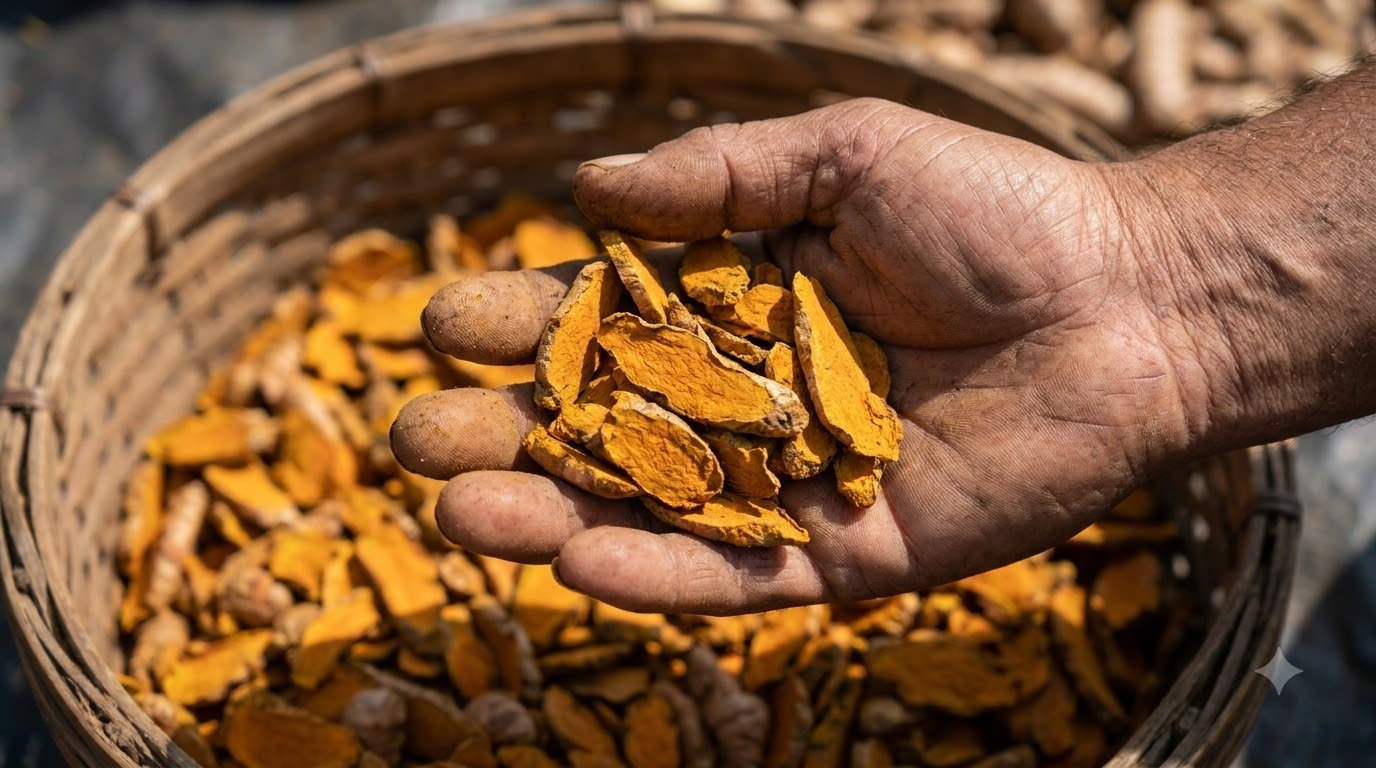
Tested turmeric packed in bulk format, matched to its lot documentation, staged ahead of dispatch.
Trial Quantities vs Bulk Container Orders: What Changes
Whether a buyer starts with a small trial order or moves straight to a bulk container, the underlying sourcing and testing process through Jowai stays the same — only the scale and packing format change.
Trial Quantities vs Bulk Container Orders
What actually stays consistent, and what scales, between a first sample and a full container order.
Trial / Sample Quantities
- Smaller packing formats suited to evaluation before committing further
- Same lot-matched COA, curcumin certification and residue-free documentation
- Useful for first-time buyers testing a new supplier relationship
- The fastest way to confirm colour, aroma and lab figures firsthand
Bulk / Container Quantities
- Packing consolidated to match container loading requirements
- Lots aggregated through Jowai to meet larger volume needs consistently
- Documentation prepared per shipment, not per retail unit
- Suited to buyers with an established, recurring sourcing relationship
Who Typically Sources Turmeric Through Jowai
Buyers building a curcumin-forward turmeric line who need lot-specific lab backing for each shipment.
Brands packaging turmeric under their own label who need consistent documentation across repeat orders.
Buyers using turmeric as an ingredient at volume, where lot-to-lot consistency matters as much as the headline curcumin figure.
Companies formulating turmeric-based products who rely on the curcumin certification as a baseline input specification.
Curious What a Jowai-Sourced Lot Actually Looks Like on Paper?
We can share a sample alongside its matched Certificate of Analysis, curcumin certification and residue-free certification, so you can see exactly what's being tested before you commit to an order.
Where International Export Capability Can Take a Jowai-Sourced Lot
Once a lot is tested and packed, the remaining question is logistics — and this is where "export capability" is either backed by a working process or isn't. Working with freight partners familiar with spice shipments out of India's northeast, dispatch can be arranged toward destinations across several regions, with paperwork and packing adjusted to what each route typically requires.
Exact routing, transit time and documentation requirements vary by destination and shipment size — these are worked out directly with each buyer rather than fixed in advance.
A Checklist for Buyers Evaluating Jowai-Sourced Turmeric
Before confirming an order, a short verification process protects against most of the common issues international buyers run into.
- 📍Confirm the aggregation point — ask specifically whether the lot passed through Jowai / the Jaintia Hills, not just "Meghalaya" broadly.
- 🔬Request the Certificate of Analysis — matched to the specific lot being offered.
- 🧪Request the curcumin certification — a separate lab-confirmed potency figure, not just a quoted percentage.
- 🧫Request the residue-free certification — particularly relevant for buyers with import-side compliance checks.
- 📦Ask about packing formats — confirm they can be adjusted to your container or retail requirements.
- ✉️Start with a trial quantity — a sample order is a reasonable way to test a new sourcing relationship before a full container commitment.
Ready to Compare a Sample Against Its Own Lab Report?
Ask us for a trial quantity alongside its matched COA, curcumin certification and residue-free certification — the same documentation that travels with every bulk order sourced through Jowai.
FAQs — Jowai Sourcing and International Export Capability
It means turmeric that has passed through Jowai, the West Jaintia Hills district headquarters, as its aggregation and testing point — rather than turmeric pooled from unspecified locations across Meghalaya. Lots are collected from surrounding villages, tested individually, and packed from that point onward, which keeps each batch traceable back to a specific area and testing date.
No. Lakadong is one of the villages within the Jaintia Hills known for the specific turmeric strain grown there, while Jowai is the district headquarters that functions as the wider trading and aggregation hub for turmeric grown across Lakadong and the many neighbouring villages around it.
In practical terms, it means packing formats suited to container loading rather than only retail bags, documentation prepared per shipment rather than per unit, a working relationship with freight partners experienced in spice exports, and lab reports — COA, curcumin certification and residue-free certification — matched to whichever lot is actually being shipped, whatever the order size.
Ask for a Certificate of Analysis covering curcumin, moisture and ash content for the exact lot, a curcumin certification confirming lab-tested potency, and a residue-free certification confirming the lot tested clear of pesticide residue. All three should be matched to the specific batch you're being offered, not a general reference document.
Yes. A trial or sample quantity is a reasonable way to evaluate colour, aroma and the accompanying lab documentation before moving to a larger, container-sized order — and the same three documents should accompany a trial quantity as they would a bulk shipment.
No. Turmeric aggregated through Jowai is grown across dozens of smallholder farms in surrounding villages rather than a single estate. That's exactly why the aggregation and testing step at Jowai matters — it's the point where separate, small lots are kept traceable rather than blended together without record.
By keeping lots separate through cleaning, drying and milling, and testing each one individually rather than blending everything into a single average figure. A buyer asking for lot-specific documentation, rather than a general company-wide claim, is the most reliable way to confirm that consistency is actually being maintained.
So, What Should Actually Guide a Jowai Sourcing Decision?
Strip away the geography lesson, and evaluating a Jowai-sourced turmeric supplier comes down to a short list of checks: confirming the lot genuinely passed through the Jaintia Hills aggregation and testing process, requesting the three documents that back up any curcumin or purity claim, and starting with a trial quantity before scaling into a full container order.
None of that requires specialised trade knowledge. It requires asking specific questions and expecting specific answers — and a supplier genuinely working through Jowai should be able to provide both without much delay.
- ✅Confirm the aggregation point — Jowai / Jaintia Hills specifically.
- 🔬Request the Certificate of Analysis for the exact lot.
- 🧪Request the curcumin certification — lab-verified, not just quoted.
- 🧫Request the residue-free certification.
- 📦Start with a trial quantity before a bulk container order.
We aggregate and test Lakadong turmeric sourced through Jowai in the Jaintia Hills, with a lot-matched Certificate of Analysis, curcumin certification and residue-free certification available on every batch — from a first trial quantity through to a full container order. Reach out through the contact options on this page to start.