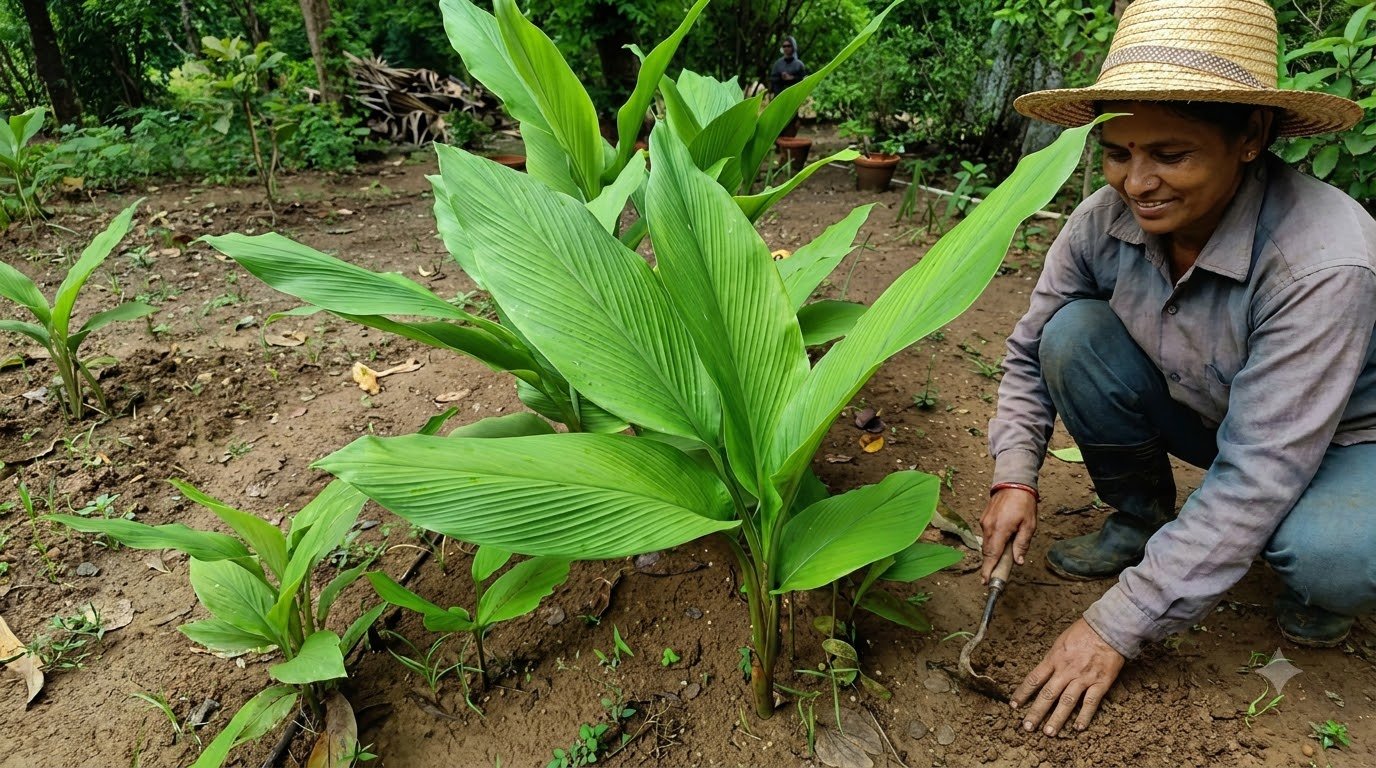
What Are Fresh Organic Turmeric Leaves, Exactly?
Fresh turmeric leaves are the above-ground foliage of the Curcuma longa plant — long, glossy, lance-shaped leaves that grow in a fan from the same rhizome that eventually gets dried and ground into turmeric powder. Picked while still green and supple, they carry a scent that's genuinely their own: grassy and slightly citrusy, closer to a bay leaf crossed with ginger foliage than to the warm, earthy smell most people associate with the spice.
"Organic" here means the plant was grown without synthetic pesticides, herbicides or chemical fertilizers, on land that's typically been managed that way for several seasons before certification is granted. For a buyer, that word only carries weight when it's backed by a named certifying body and traceability back to a specific farm block — not just printed on a listing.
It's worth being direct about one thing upfront: turmeric leaves are not a curcumin product. Curcuminoids concentrate almost entirely in the rhizome. Buyers sourcing leaves are after aroma, volatile oil content and culinary character — a genuinely different value proposition from the extract and powder side of the turmeric trade.
A surprising number of first-time buyers assume turmeric leaves are simply a cheaper, greener way to get curcumin. They aren't. If your formulation needs curcuminoid content, you want the rhizome, the extract, or the powder — not the leaf. Leaves are the right product when what you actually need is aroma: for cooking, for essential oil distillation, or for a tea and infusion blend.
The Turmeric Leaf Harvest Calendar
Unlike turmeric powder, which a supplier can usually ship year-round from stored stock, fresh leaves follow the plant's own growing cycle closely. Understanding that cycle is the first thing a buyer should factor into any order timeline.
Turmeric's Annual Growth Cycle & Leaf Availability
A typical cultivation calendar for turmeric grown in Northeast India. Regional climate and cultivar can shift these windows by a few weeks either way.
Who Actually Buys Fresh Turmeric Leaves in Bulk
Because the leaf isn't a curcumin product, its buyers look nothing like the typical extract or powder customer. Four categories account for most of the bulk enquiries we see.
Turmeric leaf is used whole to wrap and steam dishes across parts of South and Southeast Asian cuisine, imparting flavour into rice cakes, steamed fish and fermented preparations without becoming part of the dish itself.
Fresh leaf is steam-distilled to produce turmeric leaf oil, a distinct aromatic product from rhizome-derived turmeric oil, used in fragrance and personal care formulation.
Dried or fresh-dried leaf finds its way into herbal tea blends and infusions, valued for a lighter, greener character than rhizome-based turmeric teas.
Restaurants and specialty food brands occasionally source small volumes of fresh leaf for plating, garnish and novel-format dishes that lean on its visual and aromatic character.
A Rough Look at Turmeric Leaf Composition
Because the leaf gets compared to the rhizome so often, it helps to see what it's actually made of. The short version: it's mostly water, and its commercial value sits in a small but distinctive slice of aromatic compounds — not in curcuminoid content.
Approximate Composition of Fresh Turmeric Leaf
Indicative figures for illustration only — actual composition varies with cultivar, growing conditions and leaf maturity at harvest. Request lab documentation for exact analysis.
- Moisture — ~75%Why the leaf is so perishable and needs cold handling almost immediately after picking.
- Fiber & plant solids — ~13%Structural leaf tissue, mostly relevant for texture in whole-leaf culinary use.
- Aromatic & volatile oil compounds — ~4%The small fraction responsible for the leaf's characteristic scent — this is what distillers and flavour buyers are actually sourcing.
- Carbohydrates, minerals & trace curcuminoids — ~8%Present, but at levels far too low to market the leaf as a curcumin source.
What Genuine Organic Turmeric Leaf Cultivation Looks Like
Because turmeric leaves are consumed whole or used in direct-contact applications like wrapping food, buyers tend to scrutinize organic claims here more closely than they would for a processed extract. That scrutiny is reasonable — here's what separates a genuine claim from a marketing one.
- A named certifying body, a certificate number, and a batch-specific Certificate of Analysis (COA) the buyer can independently verify
- Traceability to a specific farm block, not a general regional claim
- Hand-weeding and natural pest management practices the farm can describe specifically
- Willingness to share farm-level records, not just a finished-product certificate
- Consistent certification status across seasons, not a one-time claim
- "Organic" used as a general marketing word with no certifying body named
- No certificate number, or one that can't be checked against a registry
- Sourcing described only as "from Northeast India" with no farm-level detail
- Reluctance to explain how pests and weeds are managed without chemical inputs
- Certification that covers the rhizome business but wasn't confirmed for leaf harvesting specifically
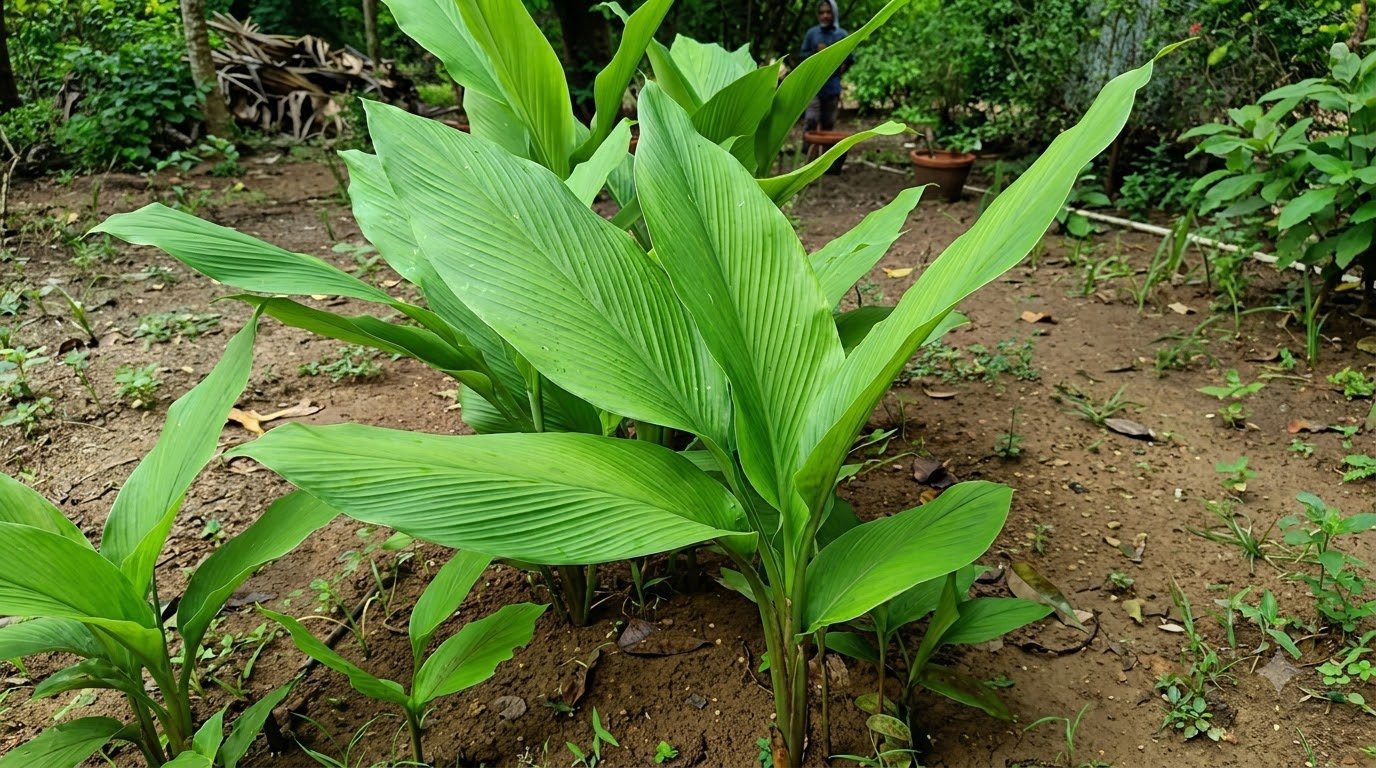
The same hill farms that grow lakadong turmeric's naturally high-curcumin rhizome also produce the plant's aromatic leaves, hand-picked earlier in the growing cycle.
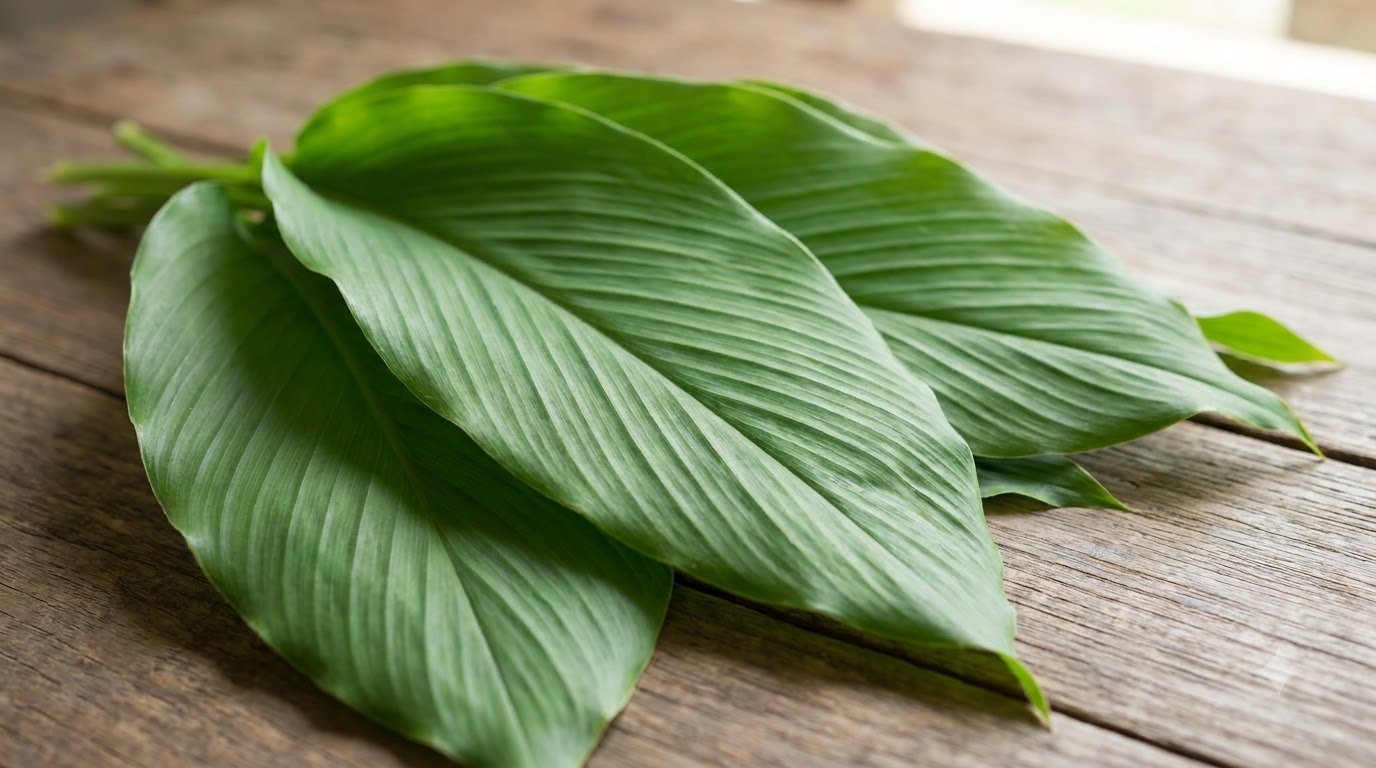
Hand-sorting at the farm removes damaged or undersized material before anything is packed for cold-chain dispatch.
Why "Fresh" Is a Time-Bound Claim, Not a Fixed One
A leaf that's 75% water and full of volatile aromatic compounds doesn't hold its character for long once it's off the plant. This is the single biggest operational difference between sourcing turmeric leaves and sourcing turmeric powder — freshness is a countdown, not a static spec.
The Freshness Window After Harvest
A general guide to how the usable window shifts over time when leaves are properly pre-cooled and packed. Actual timing depends on cold-chain quality and ambient conditions.
Fresh Leaves vs. Dried Leaves vs. Turmeric Powder
Not every buyer actually needs the fresh, whole leaf. Being honest about the trade-offs here saves both sides a difficult conversation after the first shipment arrives.
Side-by-Side: Three Different Turmeric Products
Fresh leaf, dried leaf and rhizome-based powder solve different problems — they aren't tiers of the same product.
| Attribute | Fresh Turmeric Leaves | Dried Turmeric Leaves | Turmeric Powder (Rhizome) |
|---|---|---|---|
| Aroma profile | Bright, green, herbaceous | Softer, hay-like, still distinct | Earthy, warm, slightly bitter |
| Curcuminoid content | Trace only | Trace only | Concentrated — the whole point of the product |
| Shelf life | Days, with cold chain | Many months, stored properly | 1–2 years, stored properly |
| Typical use | Wrapping, garnish, oil distillation | Tea blends, infusions | Cooking, capsules, colour, formulation |
| Logistics demand | High — cold chain, fast transit | Low — ambient shipping | Low — ambient shipping |
| Best fit for | Buyers who need the leaf's own aroma | Buyers who want leaf character without perishability | Buyers who need curcuminoid content or the classic spice |
Not Sure If Fresh, Dried or Powder Fits Your Order?
Tell us what you're formulating or cooking and we'll tell you honestly which turmeric format actually fits — no obligation, just a straight answer before you commit to a bulk quantity.
How a Fresh Leaf Order Actually Moves, Step by Step
Given how short the usable window is, the sequence between harvest and dispatch matters more here than with almost any other turmeric product. This is the order it should follow.
A Buyer's Checklist for Sourcing Fresh Organic Turmeric Leaves
Whether you're testing a small trial batch or setting up a recurring seasonal contract, this is the order experienced buyers tend to work through.
- ⏱️Confirm the harvest-to-ship window — ask exactly how many hours or days pass between picking and dispatch.
- 📜Request organic verification and a COA, not just a claim — get the certifying body's name, a certificate number, and a batch-specific Certificate of Analysis (COA) you can check.
- ❄️Ask how the leaves are cooled and packed — pre-cooling method and carton ventilation both affect what arrives at your dock.
- 🔀Clarify fresh versus dried before quoting volumes — they're different products with different yields per kilo of raw leaf.
- 🛂Check phytosanitary and import paperwork for your country — requirements vary significantly by destination market.
- 📦Order a trial shipment first — a small batch shows you real transit performance before you commit to a standing contract.
Planning a Bulk Fresh Turmeric Leaf Order?
Peak-season slots for fresh leaf harvesting and cold-chain export get booked ahead of the July–October window. Reach out early to confirm volumes, packaging format and shipping lead time.
FAQs — Fresh Organic Turmeric Leaves
Fresh turmeric leaves are prized mainly for their aroma rather than their curcumin content. Buyers use them to wrap and steam traditional dishes across South and Southeast Asian cuisine, to distill turmeric leaf essential oil, in herbal tea and infusion blends, and occasionally as a fragrant garnish in specialty food service.
No. The rhizome is the underground stem that gets dried and ground into turmeric powder, and it's where curcuminoid concentration is highest. The leaf is the plant's above-ground foliage, valued for its own distinct aroma profile, and it is not a substitute ingredient for turmeric powder in a spice blend.
Turmeric leaves contain only trace levels of curcuminoids compared to the rhizome, which is why leaves are not sold or marketed as a curcumin source. Their commercial value comes from aroma, volatile oil content and culinary character, not standardized curcuminoid percentage.
Without cold-chain handling, fresh turmeric leaves are typically at their aromatic peak for only a few days after harvest. Pre-cooling within hours of picking and packing in ventilated, moisture-controlled containers extends that window enough to reach most export destinations while the leaf is still usable.
For turmeric leaves, organic means the plant was grown without synthetic pesticides, herbicides or chemical fertilizers, ideally verified by a recognized certification body and traceable back to a specific farm or growing region rather than a general regional claim.
Yes, fresh turmeric leaves are exported internationally, most commonly by air freight given their perishability. They are typically hand-sorted, pre-cooled, packed in ventilated or moisture-controlled cartons, and shipped with a phytosanitary certificate, a Certificate of Analysis (COA) and required customs documentation appropriate to the destination country.
Fresh leaves carry a brighter, greener aroma but a short usable window and higher logistics demands. Dried leaves trade some of that aromatic intensity for a much longer shelf life and simpler shipping, which makes them a more practical choice for buyers who don't need the leaf at its absolute peak freshness.
Is Fresh Turmeric Leaf the Right Product for Your Order?
If what you need is aroma — for a wrapped dish, an essential oil distillation, a tea blend, or a genuinely novel formulation — fresh organic turmeric leaves are a real, defensible product with a genuine seasonal story behind them. If what you need is curcuminoid content, this isn't the ingredient, and no amount of "organic" or "fresh" branding changes that; you want the rhizome, powder or extract instead.
Either way, the questions worth asking a supplier stay the same: how organic status is verified, how short the harvest-to-ship gap actually is, and whether fresh, dried or powder genuinely fits what you're building. A supplier who answers all three plainly, rather than defaulting to whichever format is easiest for them to ship, is one worth working with.
Alongside our standardized turmeric powder and curcuminoid extracts — each backed by full Curcumin Certification — we supply fresh and dried organic turmeric leaves harvested from the same high-curcumin turmeric farms in Meghalaya's Jaintia Hills. Since leaves aren't a curcuminoid product, each batch is verified on its own terms: organic status, cold-chain handling and a Certificate of Analysis (COA) covering purity and aromatic quality, arranged per shipment. Reach out through the contact section above for seasonal availability, sample requests or bulk enquiries.