What "Direct from Source" Actually Means for a Turmeric Buyer
Most turmeric that reaches an overseas buyer has already passed through several hands before it ever sees a shipping container. A village-level trader buys from individual farmers, a district aggregator buys from several traders, and a domestic exporter buys from the aggregator — and only then does the product get packed for international shipment. Every one of those handoffs adds time, thins out the paper trail, and makes it harder to answer a simple question: which farm, which cooperative, and which harvest lot actually produced this batch?
A direct from source Lakadong Turmeric supplier and exporter removes as many of those handoffs as it can. Instead of buying finished stock from a regional trader, the exporter works directly with named farming cooperatives in the Jaintia Hills, oversees the drying, milling, and packing itself, and ships the finished product straight to the buyer. The result isn't just a shorter supply chain on paper — it's a batch that can be traced back to an actual harvest lot, tested at that lot level, and certified before it ever leaves the warehouse.
For a buyer, the practical difference shows up in three places: how specific the documentation is, how quickly questions about a batch get answered, and how consistent the curcumin content stays from one order to the next.
Where Direct Sourcing Begins: the Jaintia Hills Farms
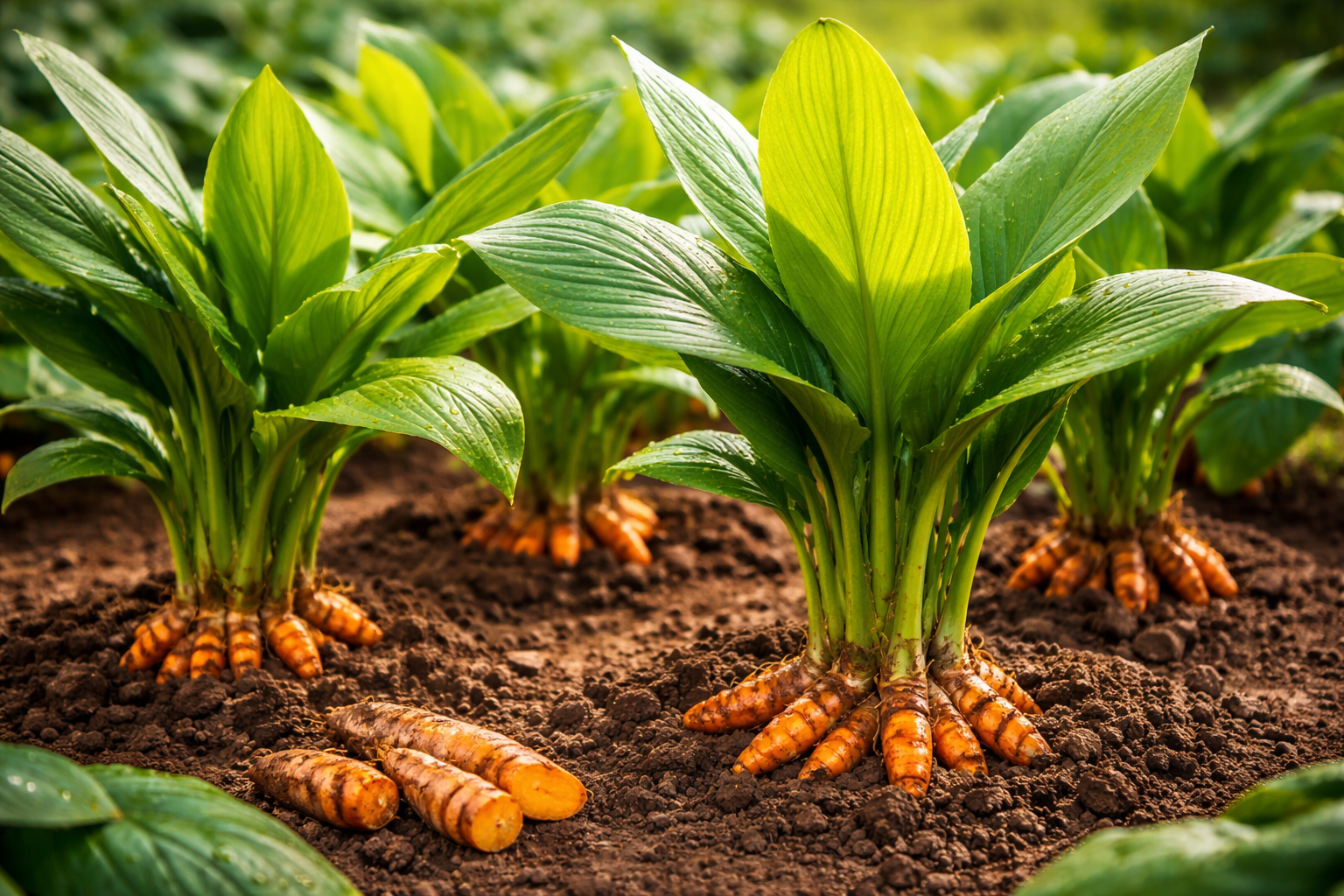
Lakadong Turmeric is grown in the Jaintia Hills district of Meghalaya, in India's northeast, typically at elevations between 800 and 1,200 metres. The soil across this belt is acidic, laterite, and naturally rich in potassium — a combination that, paired with heavy monsoon rainfall and cool growing-season temperatures, has produced some of the highest curcumin readings recorded for any turmeric variety.
Cultivation is still largely in the hands of tribal farming families from the Jaintia (Pnar), Khasi, and Garo communities, working through small cooperatives rather than large commercial plantations. Growing methods here lean heavily on traditional, low-input practices, simply because that is how turmeric has been cultivated in these hills for generations. A direct-source exporter deals with these cooperatives by name, rather than through a chain of buyers who have never actually visited the district.
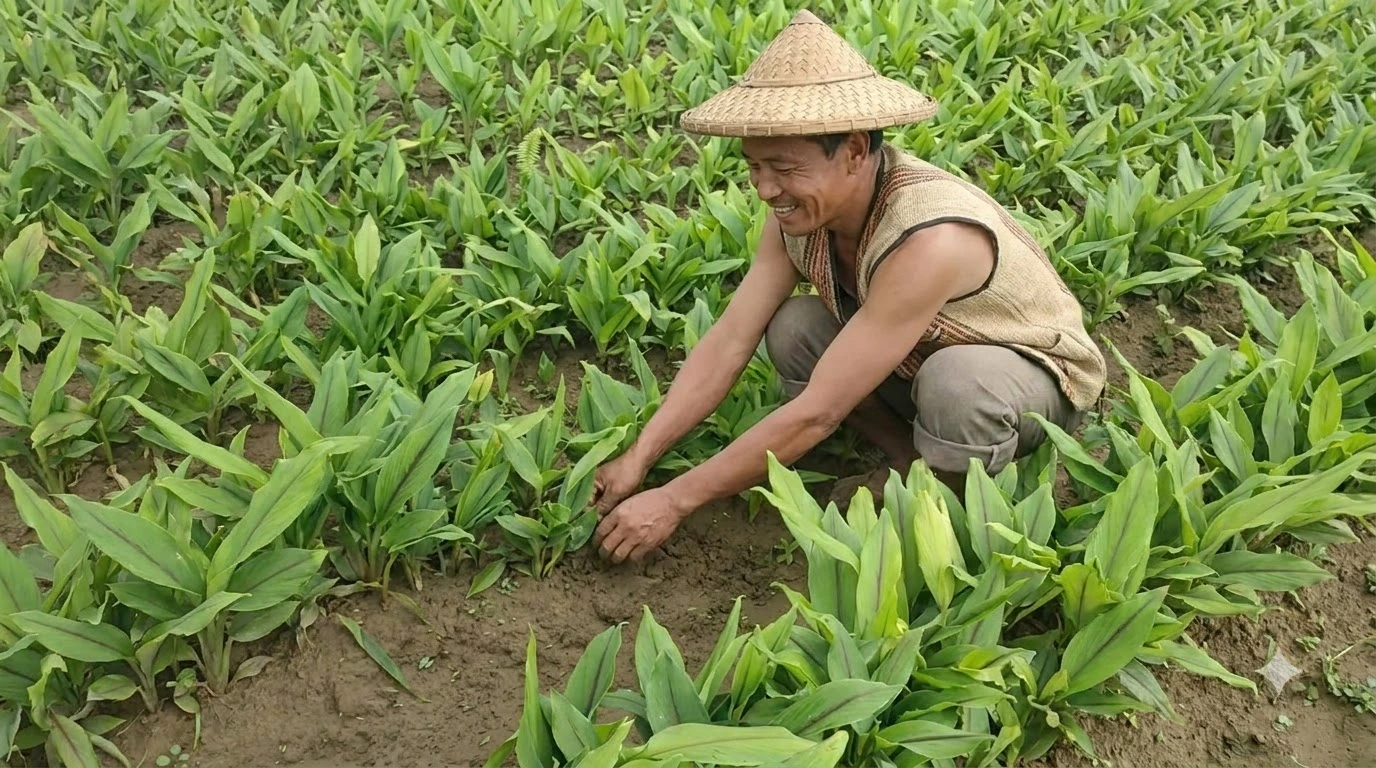
The Jaintia Hills terrain a direct-source exporter deals with firsthand — no intermediary buyer stands between this land and the batch that reaches your warehouse.
The Curcumin Difference — By the Numbers
Curcumin content is the single most important number in this category, and it varies enormously depending on where turmeric is grown. The chart below places Lakadong Turmeric — sourced and lab-tested directly at the farm level — against the two other turmeric types most commonly sold on the wholesale market.
This isn't a marketing distinction — it's a laboratory-verifiable one. Any direct-source exporter should be able to produce a Certificate of Analysis for the exact harvest lot behind your order, rather than an old test result quoted from memory.
Direct Export vs. a Traditional Multi-Layer Trade Chain
The clearest way to understand what "direct from source" changes is to lay both routes side by side. Neither route is improper — but every additional layer in a traditional chain is one more point where traceability, freshness, and communication can break down.
With fewer handoffs, a direct-source exporter can tell you exactly which cooperative and harvest lot produced your specific shipment — and can answer questions about that lot directly, instead of relaying them through a chain of previous buyers.
Our Three-Part Verification Standard
Being a direct-source exporter means taking on responsibilities a trading intermediary would otherwise carry. Every batch leaving our processing facility is checked against three separate standards before it is cleared for dispatch.
A lab report specific to the harvest lot in your order, covering curcumin percentage, moisture, ash content, and volatile oil — not a generic document reused across shipments.
A dedicated certification confirming the curcumin percentage for that exact batch, typically 7–12% by dry weight — the number that separates genuine Lakadong from ordinary turmeric.
Independent laboratory screening confirming the batch shows no detectable pesticide residue and no heavy-metal levels above safe limits, tied to the same harvest lot as your shipment.
A supplier who can produce one of these documents but not the other two is only telling part of the story. Before confirming any order, ask for the COA, the curcumin certification, and the residue-free certification for the specific harvest lot allocated to your shipment — not a set of older documents from a previous batch.
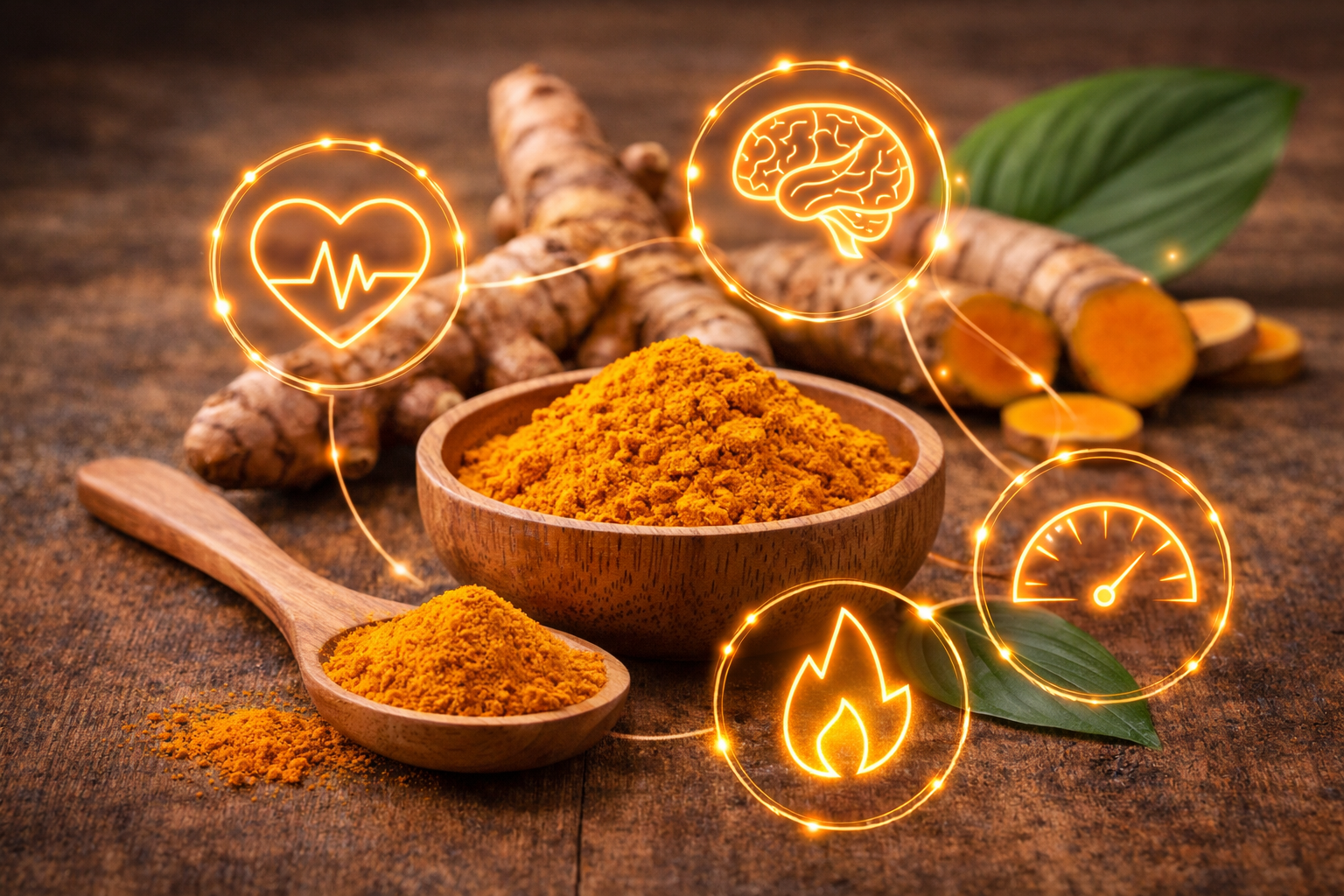
The deep, saturated color of Lakadong Turmeric powder milled from one certified harvest lot — no blending across batches from different sources.
Talk to the Source, Not a Middleman
COA verified · Curcumin certified · Residue-free tested · Private label available · Shipping to 10+ countries
The Direct Export Journey
Here is what actually happens between harvest and dispatch when a Lakadong Turmeric supplier controls the process directly, rather than buying finished stock from a trader.
Where a Direct-Source Lakadong Turmeric Exporter Ships
As a direct exporter, we currently supply buyers across several regions. The chart below shows the approximate share of current export volume by region — useful context if you're deciding where your own supply chain fits.
Domestic Indian orders are handled separately by road and rail freight and are not part of the export split shown above. Wherever the destination, every shipment travels with the same COA, curcumin certification, and residue-free certification attached at the batch level.
Packed and documented at our own facility — the COA, curcumin certification, and residue-free certification travel with the batch, not just the invoice.
Who Actually Needs a Direct-Source Exporter
Not every buyer needs to go direct to source — but for certain kinds of businesses, it solves a real problem.
Need a consistent, lab-documented curcumin percentage batch after batch, and a paper trail they can hand to their own quality team.
Want a distinct, high-potency turmeric for premium product lines, with residue-free testing they can reference in their own ingredient sourcing notes.
Need packing and labelling done under their own brand, without adding yet another packing intermediary into an already long chain.
Want a single point of contact for stock, documentation, and repeat orders — instead of re-verifying a new trader's claims every season.
FAQs — Direct from Source Lakadong Turmeric Supplier
It means the exporter has a direct working relationship with Jaintia Hills farming cooperatives and ships turmeric straight from processing to the buyer, without passing through village traders, regional aggregators, or intermediary trading houses. Fewer handoffs mean better batch traceability and faster communication between the farm and the buyer.
A general trading company usually buys finished turmeric from multiple aggregators without visibility into which farm or cooperative it originated from. A direct-source exporter works with named cooperatives, can trace a shipment back to a specific harvest lot, and controls testing and packing in-house rather than relying on a third party's paperwork.
At minimum, a batch-specific Certificate of Analysis, a curcumin certification stating the percentage for that exact harvest lot, and a residue-free certification confirming the batch has been independently screened for pesticide residue and heavy metals. Standard shipping paperwork — commercial invoice, packing list, and bill of lading or airway bill — should accompany every international shipment.
Yes. A genuine direct-source exporter will send a pre-shipment sample from the specific harvest lot allocated to your order, along with its COA. You can send that sample to an independent laboratory of your choice to confirm the curcumin percentage before committing to the full shipment.
No. Residue-free certification confirms that independent laboratory testing found the batch free of detectable pesticide residues and heavy metals above safe thresholds. It is a testing outcome tied to that specific batch, not a farming-system certification. Treat it as a lab result rather than a substitute for any separate program your own market may require.
Direct exporters usually work across a range of volumes — small trial orders for first-time buyers who want to test the product, mid-size wholesale orders for regional distributors, and full container loads for established supplement or food manufacturing brands. The right starting volume depends on your intended use and how quickly you plan to place repeat orders.
Yes, most direct exporters that control their own processing and packing lines can fill and label product under a buyer's own brand, since they are not dependent on a separate packing intermediary. Lead times are usually longer for private label runs than for bulk unbranded shipments, so it helps to confirm packaging specifications early in the inquiry.
Questions to Ask Before You Buy Direct
Use this checklist on your first call or email with any supplier claiming to sell direct-from-source Lakadong Turmeric.
- 📍Can they name the specific cooperative or village the batch came from?
- 📄Is the COA specific to your harvest lot, or a general document reused across orders?
- 🧪Is curcumin certification tied to that same lot, with a percentage in the 7–12% range?
- 🍃Has residue-free testing been done independently for that batch?
- 🔗How many trading layers exist between the farm and the exporter you're speaking to?
- 📦Will they send a pre-shipment sample from your actual allocated lot before you commit?
Farm-direct sourcing from Jaintia Hills cooperatives · Batch-specific COA on every shipment · Curcumin certification in the 7–12% range · Independent residue-free testing · Private label and OEM packing · Worldwide export with no trading intermediaries in between.